SECURIN VALIDATE
Know which vulnerabilities attackers can actually exploit.Not just which ones exist.
Securin Validate executes safe, real-world attack scenarios inside your environment to confirm which exposures represent proven risk, and which your controls already stop.
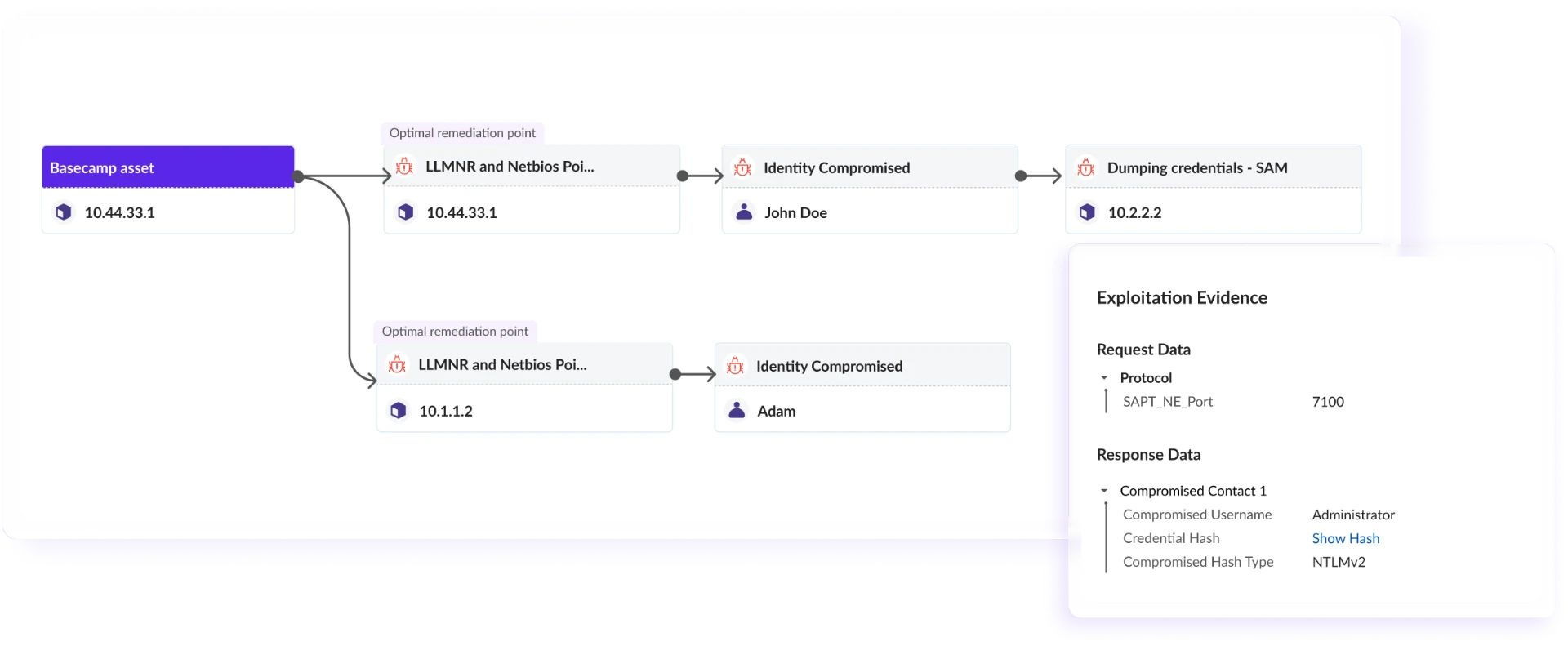
A scanner finding and a proven attack path are not the same thing.
of CISA KEVs covered by the Securin Validate exploit catalog
unique, human-validated exploit modules across 6,727 CVEs and 13 MITRE ATT&CK tactics
THE RED TRIAD
Three questions everysecurity team needs answered
Securin Validate structures every assessment around reachability, exploitability, and defendability.
Reachable
Can the asset be reached?
Maps all live network assets, open ports, and services from within your environment, using the same L2-network perspective an attacker with internal access would have.
Exploitable
Can it actually be exploited?
Safely executes real exploits against matched CVEs and Active Directory misconfigurations, then chains successes to show the furthest point an attacker could reach, including domain admin compromise.
Defendable
What did your defenses miss?
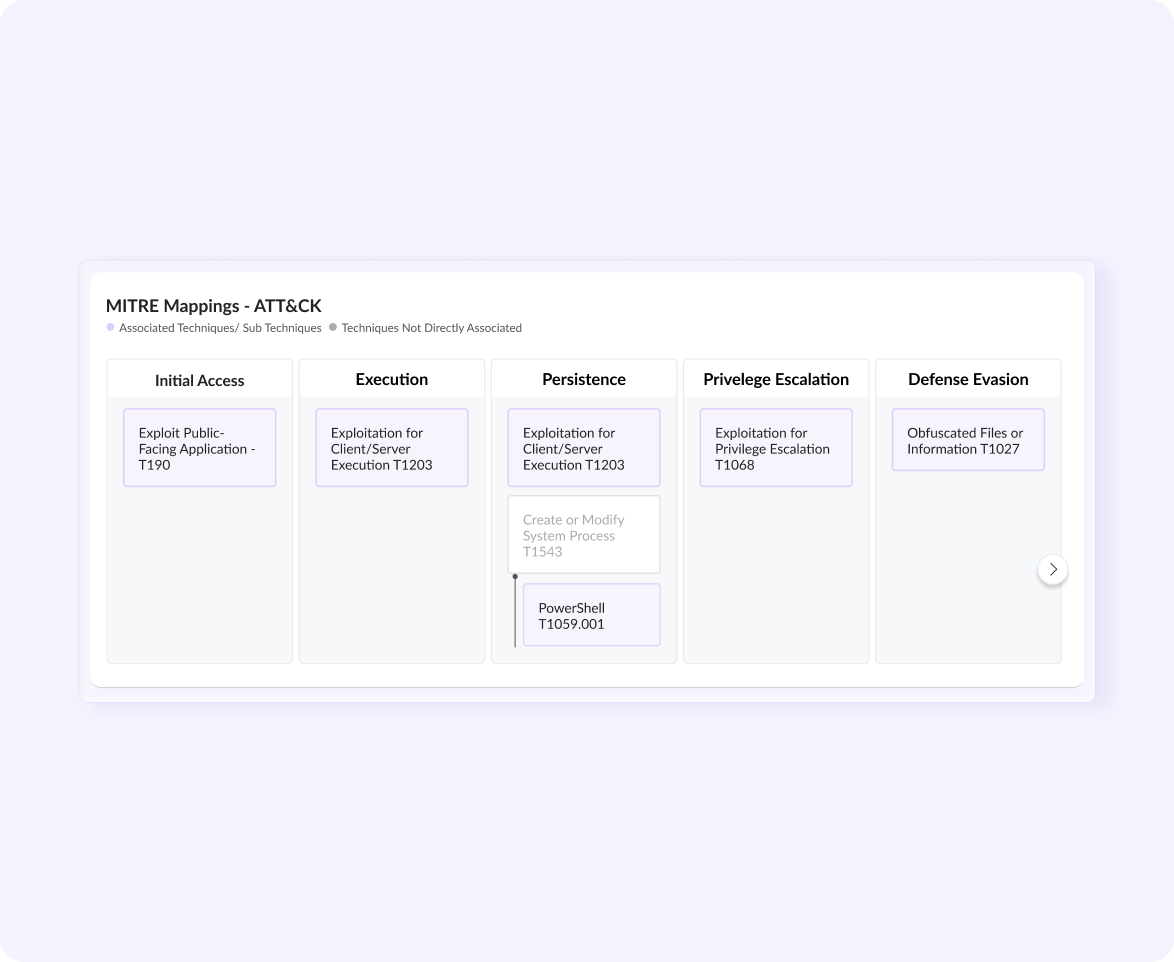
Simulates attacker techniques mapped to MITRE ATT&CK to measure whether your EDR, SIEM, and firewalls detect and block real attacks, not just pass configuration audits.
EXPOSURE VALIDATION
Your scanners find the vulnerabilities. Securin Validate tells you which ones are exploitable.
Not every critical finding is an active threat. Most will never be exploited. The challenge is knowing which ones will, before an attacker gets there first.
- Works with your existing asset and exposure telemetry
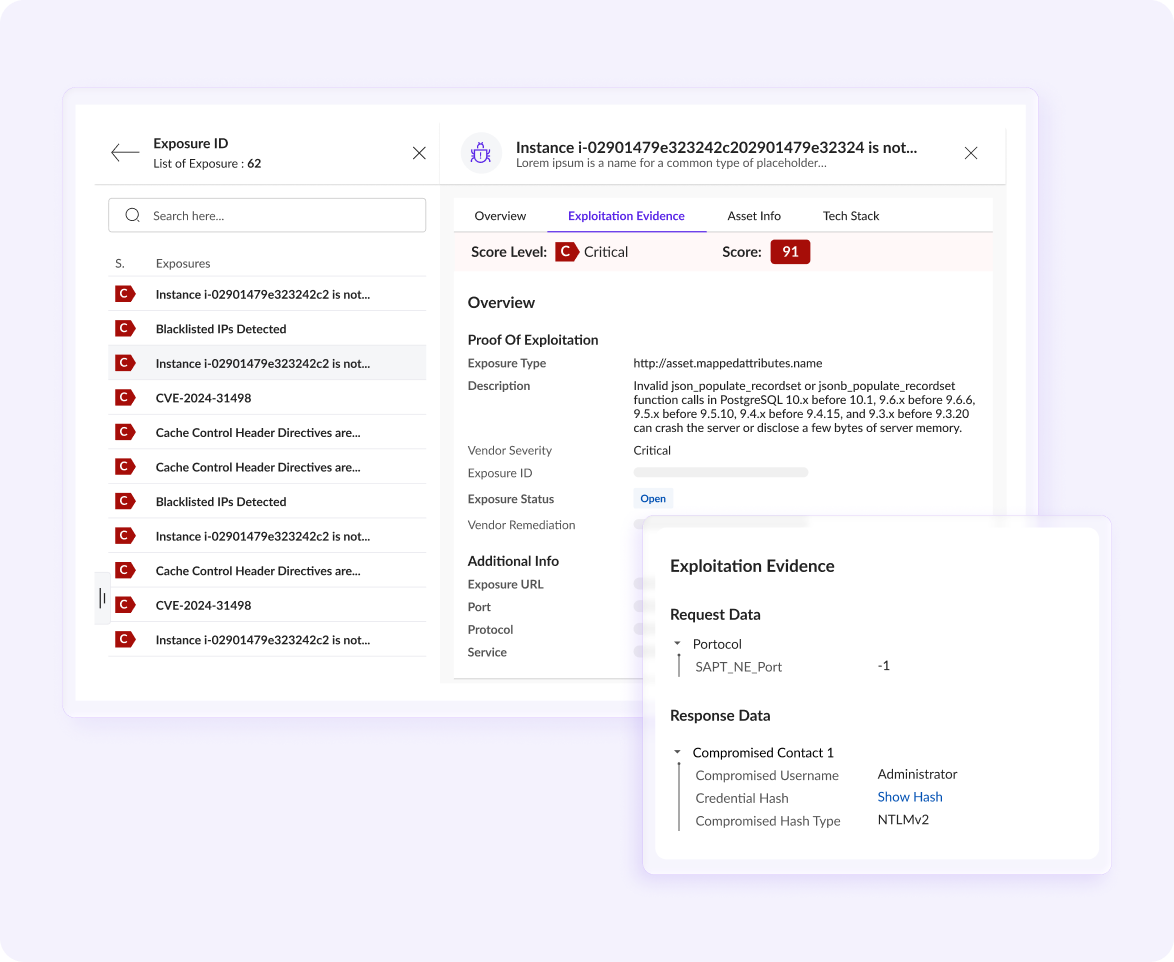
- Runs safe exploit payloads against each finding to confirm reachability and exploitability in your network
- Separates findings with confirmed attack paths from those that are theoretical risk only
AUTOMATED PENETRATION TESTING
Your network changes daily. Your pen test runs once a year.
Every deployment, configuration change, and newly onboarded asset changes your attack surface. A pen test scheduled for Q4 cannot tell you what is exploitable in a network that looks different today than it did last month. The gaps between engagements are exactly when drift goes undetected.
- Run continuous automated pen tests on a defined schedule, with no human coordination required
- Re-test previously discovered attack paths after every patch or configuration change to confirm they are closed
- Prioritize the attack paths that reach your most critical assets, continuously updated as your environment changes
ATTACK PATH ANALYSIS
Know exactly which vulnerabilities sit on a path to your most critical assets.
Vulnerable by scanner and exploitable in your environment are two different things. Without empirical validation, everything looks equally urgent and nothing gets the focus it deserves.
- Distinguishes assets with confirmed, exploitable vulnerabilities from those flagged by scanner detection only, based on actual exploit execution results
- Generates a graph-based attack path map showing entry points, lateral movement paths, and the high-value targets reached during each validated scenario
- Surfaces which assets sit on a path to critical infrastructure so remediation effort goes where attacker opportunity is highest
INSIDE SECURIN VALIDATE
Discover. Exploit.Verify.
From scanner output to validated attack paths.
Scanner Telemetry Validation
Imports findings from Tenable, Qualys, Rapid7, and other vulnerability scanners. Maps each finding to the exploit catalog to determine whether a real exploit exists and can be safely executed in your environment.
Separates exploit-verified vulnerabilities from those flagged by scanner detection only. Gives prioritization an empirical foundation rather than a theoretical one.
Asset and Exposure Discovery
The Basecamp node scans internally for live hosts, open ports, and running services using the same network perspective an attacker with internal access would have. Operates independently of any asset inventory or CMDB.
Finds the assets your scanners were never pointed at, including forgotten infrastructure, acquired-company assets, and shadow deployments.
Autonomous Exploitation Engine
Executes safe exploit payloads against matched CVEs and Active Directory misconfigurations. Chains successes to show the furthest lateral movement an attacker could achieve from each entry point, including domain admin compromise scenarios.
Replaces theoretical severity scores with empirical proof: here is what an attacker could reach from this asset today.
Security Control Validation
Simulates real-world attacker techniques across 13 MITRE ATT&CK tactics to measure detection and prevention efficacy of EDR, SIEM, and firewall layers under real conditions, not configuration audits.
Shows exactly where your detection stack fails before an attacker finds out for you.
Attack Path Visualization
Generates a graph-based map showing entry points, lateral-movement paths, choke points, and high-value targets reached during each validated scenario. Includes technical proof-of-concept evidence for each step.
Engineering teams see exactly what to fix and can reproduce issues without additional investigation.
Automated Verification Testing
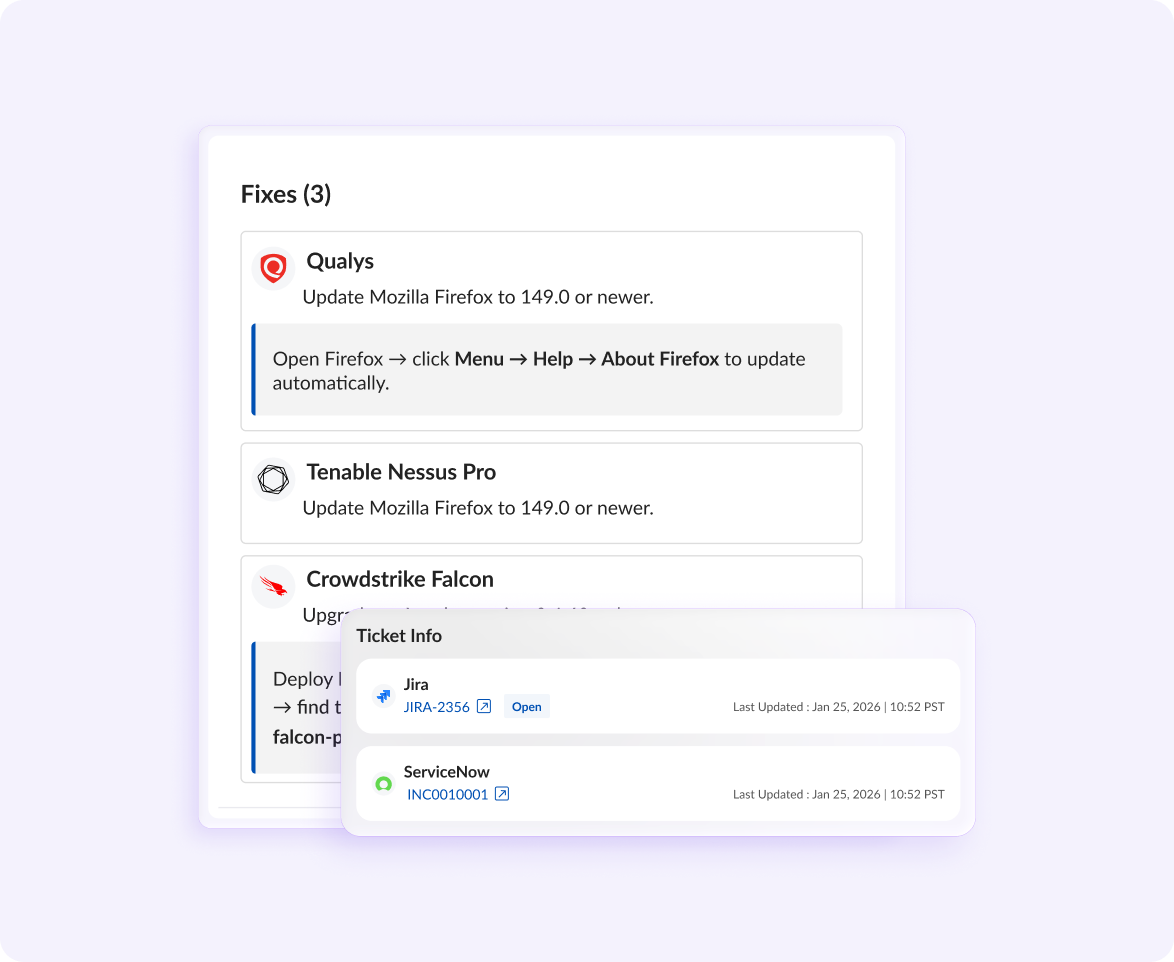
After a fix is applied, re-runs the specific exploited path to confirm the patch or configuration change actually neutralized the threat. Results update the corresponding finding record in Securin Exposure.
Closes the loop. Eliminates the gap between scanner says clean and attacker still gets in.
CTEM lifecycle: Validate owns the Adversarial Validation stage. Confirmed attack paths and control gaps feed directly into Securin Exposure for prioritized remediation tracking. Surface-discovered external findings can also be fed into Validate for end-to-end coverage across the full attack surface.
OUTCOMES FOR EVERY TEAM
What changeswhen you have proof
Different roles, same platform, different conversations.
Vulnerability Manager
Security Engineering
You are not short on findings. You are short on certainty. Securin Validate tells you which findings in your scanner queue can actually be exploited in your environment right now.
What changes:
Scanner findings ranked by exploitability
Your existing telemetry, filtered to the findings with confirmed attack paths.
Unknown assets surfaced and tested
Basecamp discovers what your CMDB does not have, then tests it automatically.
Verified fixes, not assumed ones
Re-test any exploited path after a patch to confirm the threat is actually neutralized.
Engineering gets proof, not descriptions
Technical PoC evidence and exact reproduction steps cut the back-and-forth on every finding.
CISO & Security Leadership
Strategy & Risk Management
You are accountable for whether your organization can withstand a real attack, not whether tools are installed and configured correctly. Securin Validate gives you the evidence to answer that question continuously.
What changes:
Board conversations backed by data
Proven attack paths and control effectiveness, expressed in business terms, not CVE counts.
Continuous compliance evidence
Audit-ready reporting for PCI, SOC 2, and insurance assessments, updated continuously, not annually.
Justified security investment
Know which controls are working and which are redundant, with evidence to back every consolidation decision.
No surprises between pen tests
Continuous validation catches drift the moment it appears, not six months later.
Red Team Lead & SOC
Offensive Security & Detection
Your constraint is not expertise, it is capacity. Securin Validate automates baseline TTP coverage so your team focuses on the complex scenarios that require human adversarial reasoning.
What changes:
Baseline TTP coverage, automated
Known techniques run continuously so your red teamers focus on complex scenarios tools cannot replicate.
Detection gaps identified by tactic
Specific MITRE ATT&CK techniques your EDR and SIEM missed, not a generic coverage score.
Drift caught immediately
Continuous campaigns test after every infrastructure change, not at the next scheduled engagement.
Custom paths codified and reusable
Known attack paths turned into single-step verification runs after any patch or configuration change.
In the age of AI, offensive-grade validation is your edge.
Active validation over passive analysis. See how Securin Validate maps attack paths in your environment and confirms your controls hold where it counts.