The Iranian cyber threat to U.S. state government networks is at its highest level in history. The U.S.–Israeli military strikes on Iran on February 28, 2026 (Operation Roar of the Lion) have created an unprecedented retaliatory threat window. During the strikes, a parallel cyberattack reportedly degraded Iranian internet to just 4% of normal levels and disrupted IRGC command-and-control systems. The decimation of Iranian leadership is expected to produce decentralized, unpredictable cyber retaliation from proxy groups coordinating via Telegram.
Over the past 120 days, three distinct campaigns linked to Iranian actors have demonstrated active targeting of government and critical infrastructure networks, deployment of new malware families, and expanded use of commercial communication platforms for command and control.
Organizations should assume that intrusion attempts are ongoing and that previously compromised networks may be leveraged for delayed-impact operations.
This brief covers the past 120 days (November 2025 – March 2, 2026) and answers four questions: what happened, what's coming, what’s changed since 2025, and what defenders can do about it.
While the 2025 conflict saw significant volume, the total disruption of the Iranian digital environment in 2026 has made retaliatory strikes more unpredictable and dangerous.
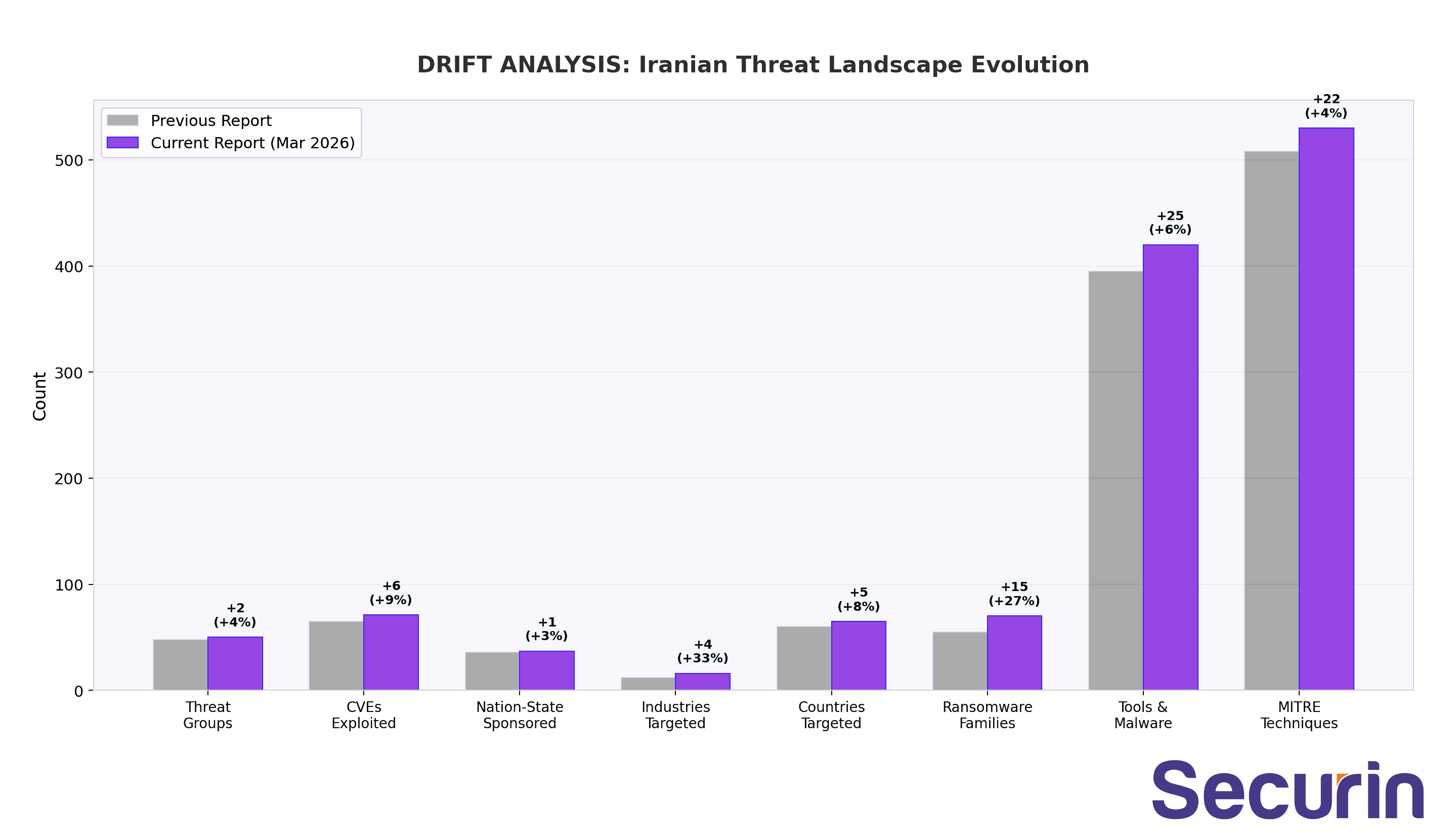
2025 Strategic Posture
2026 Tactical Shifts
Operational Scale: 48 tracked groups with 75% confirmed state-sponsorship.
Operational Scale: Increase to 50 groups; surge in decentralized retaliation by proxy entities.
Command & Control: Disrupted infrastructure (4% connectivity) forced proxy coordination via Telegram and Discord.
Primary Trigger: June 2025 Conflict ("Operation Rising Lion") causing a 133% activity surge.
Primary Trigger: Feb 2026 Strikes ("Operation Roar of the Lion") creating a historic retaliatory window.
Targeting Scope: Focused primarily on Government, Communications, and Education sectors.
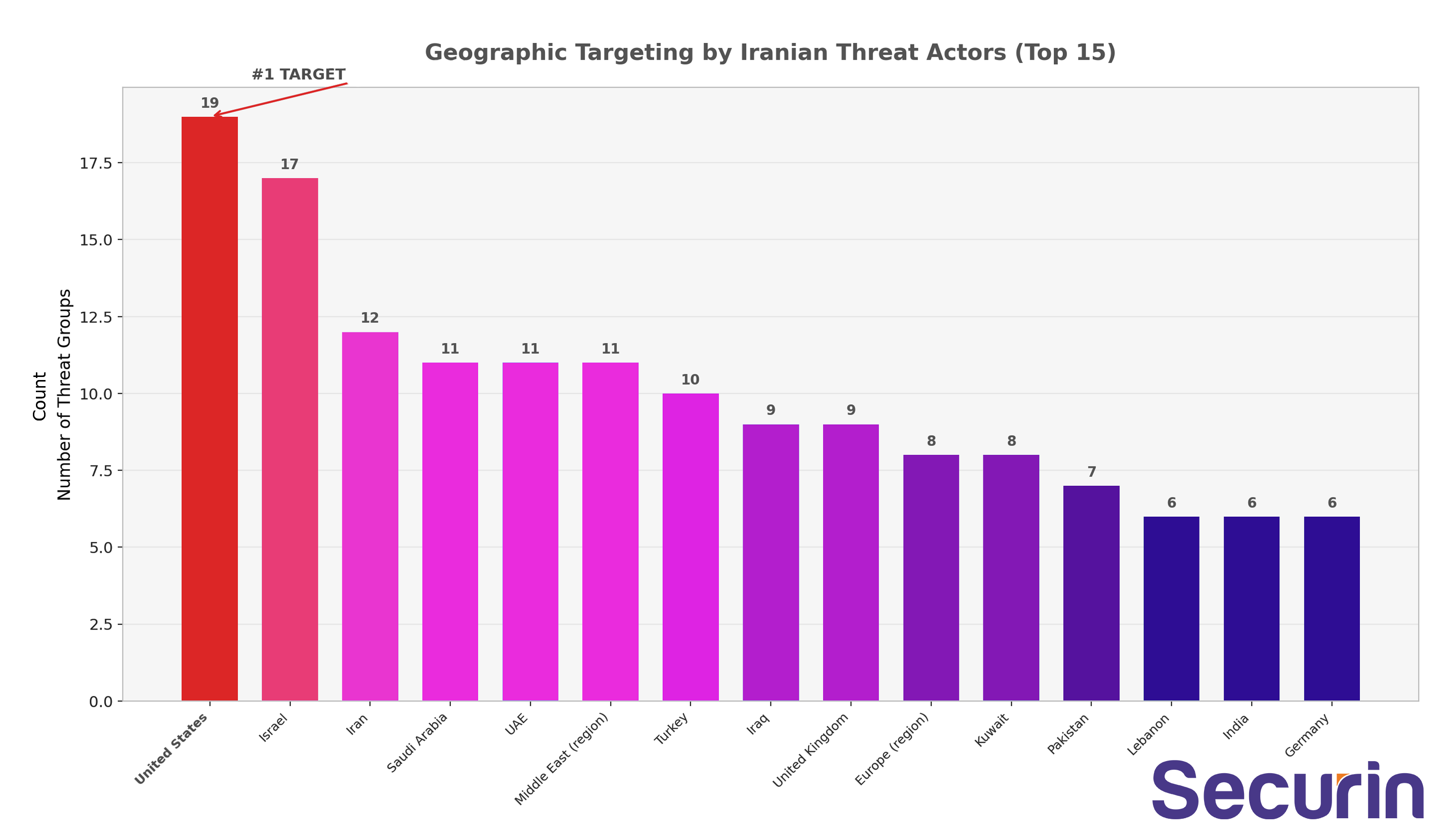
Targeting Scope: Aggressive focus on U.S. State entities and critical infrastructure (19 groups now active against U.S. targets).
Attack Vectors: Exploitation of perimeter security (VPNs, Web Apps) and traditional email.
Attack Vectors: Diversification into social platforms (WhatsApp) and legitimate RMM tool abuse.
Operational context
Iran’s cyber strategy favors asymmetric actions that are deniable, scalable, and disruptive without triggering conventional escalation. When under external pressure, Tehran has historically relied on cyber operations to signal capability, impose costs, and shape narratives.
Recent geopolitical developments increase the likelihood of:
• Short-term disruption campaigns
• Medium-term ransomware operations via pre-established access
• Continued espionage against policymakers and infrastructure operators
• Selective destructive attacks against high-value targets
Section 1: Cyber threats sourced From Iran (Last 120 Days)
Three confirmed active campaigns were disclosed or observed during the 120-day window. Each involves a distinct threat actor, novel malware and specific attack vectors directly relevant to state government networks.
What happened: Israeli intelligence agency INDA uncovered a multi-week social engineering campaign targeting senior U.S. and Israeli defense and government officials, including their family members. APT42 operators impersonated known contacts over WhatsApp, building trust over days and weeks before delivering the TAMECAT backdoor. This is the first recorded instance of APT42 using Telegram and Discord as C2 channels. By avoiding email channels, the campaign bypasses many institutional security controls.
Detail
Value
Malware
TAMECAT — PowerShell-based modular backdoor with Telegram/Discord C2
Senior U.S. defense officials, government employees, Israeli security personnel
Why it matters
Bypasses email security entirely. State officials with defense or policy roles are in scope.
Campaign B: MuddyWater / MuddyViper Backdoor (Disclosed December 2025)
Threat Actor: MuddyWater (aka Mango Sandstorm, TA450) — Iran Ministry of Intelligence and Security (MOIS)
What happened: ESET disclosed a sustained campaign deploying the previously undocumented MuddyViper backdoor against Israeli entities across local government, manufacturing, utilities, transportation and academia. MuddyWater used a novel 64-bit loader ("Fooder") to decrypt and execute payloads entirely in memory, evading traditional endpoint detection.
Six distinct malware families were deployed through phishing and abused remote management tools to maintain persistent administrative control. In-memory execution techniques reduce forensic visibility and complicate detection.
Local government, utilities, transportation, manufacturing, academia
Why it matters
Directly overlaps with state government infrastructure. Legitimate RMM tools used for access are commonly whitelisted.
Campaign C: Infy / Prince of Persia Resurgence (August – December 2025)
Threat Actor: Infy (aka Prince of Persia) — Iranian nation-state APT, re-emerged after a three-year hiatus.
What happened: SafeBreach researchers discovered this long-dormant APT's return with updated malware targeting government entities, dissidents, and critical infrastructure across Iran, Iraq, Turkey, India, Canada and Europe. The campaign introduced Telegram-based C2 for the first time — a Telegram bot ("ttestro1bot") relayed commands to a Persian-speaking operator. Collectively, these campaigns demonstrate continued investment in credential harvesting, covert persistence and scalable access operations.
Detail
Value
Malware
Foudre v34 (downloader/profiler), Tonnerre v17 and v50 (info stealers with Telegram C2)
Government entities, dissidents, critical infrastructure
Why it matters
Telegram C2 and macro-based delivery can be trivially redirected at U.S. state targets in retaliation window.
Additional Context: 120-Day Geopolitical Backdrop
The June 2025 Israel-Iran conflict established a modern baseline for how quickly Iran’s proxy ecosystem can mobilize in a crisis: researchers tracked 178+ hacktivist and proxy groups mobilizing simultaneously across Telegram. This creates a high noise environment where attribution is delayed and response capacity is the limiting factor.
OT-focused telemetry from Nozomi Networks Labs observed a 133% surge in Iranian cyberattacks targeting U.S. entities, with transportation and manufacturing as the most-affected sectors. These sectors sit on the boundary between state IT and physical services, where outages become public incidents fast. The February 28, 2026 strikes were significantly more devastating than the June 2025 conflict - retaliatory cyber activity is expected to be broader in target selection and less predictable in execution.
This baseline matters, because February 28 2026 is not “more of the same.” The strikes were paired with a parallel cyber action that reportedly degraded Iranian connectivity and disrupted command-and-control. When you compress leadership, degrade infrastructure and trigger retaliation incentives at the same time, you don’t get clean, choreographed operations. You get fragmented execution: more actors, more noise, more opportunistic targeting and a higher probability of miscalculation.
Operationally, this changes defender expectations in three ways:
Faster mobilization, lower discipline: Telegram-coordinated proxy swarms tend to produce rapid DDoS, defacement, and data-leak activity. These are not “just PR events” in the public sector, where citizen-facing outages and public narrative damage can degrade trust, disrupt services and drain incident-response capacity.
Higher spillover into civilian infrastructure: The 2025 telemetry already showed concentration in transportation and manufacturing. Those sectors map directly to state government dependencies: DMV systems, emergency logistics, ports, transit authorities, state contractors and industrial suppliers. Expect follow-on targeting where state systems touch physical services or vendor access.
Retaliation can shift from symbolic to disabling: A disrupted command environment increases the odds of decentralized operators using whatever access already exists, including pre-positioned footholds established through VPN and Exchange exploitation. That is the bridge between geopolitical shock and delayed-impact outcomes like ransomware, wipers, or OT disruption.
The NSA/CISA/FBI/DC3 Joint Fact Sheet (June 30, 2025) is the anchor that turns this from “plausible” to “expected.” It explicitly warned that Iranian cyber actors may target vulnerable U.S. networks, with defense industrial base companies having Israeli relationships at elevated risk.
Bottom line: June 2025 proved Iran can mobilize at scale. February 2026 increases volatility and broadens target selection. This is a change in conditions, not volume.
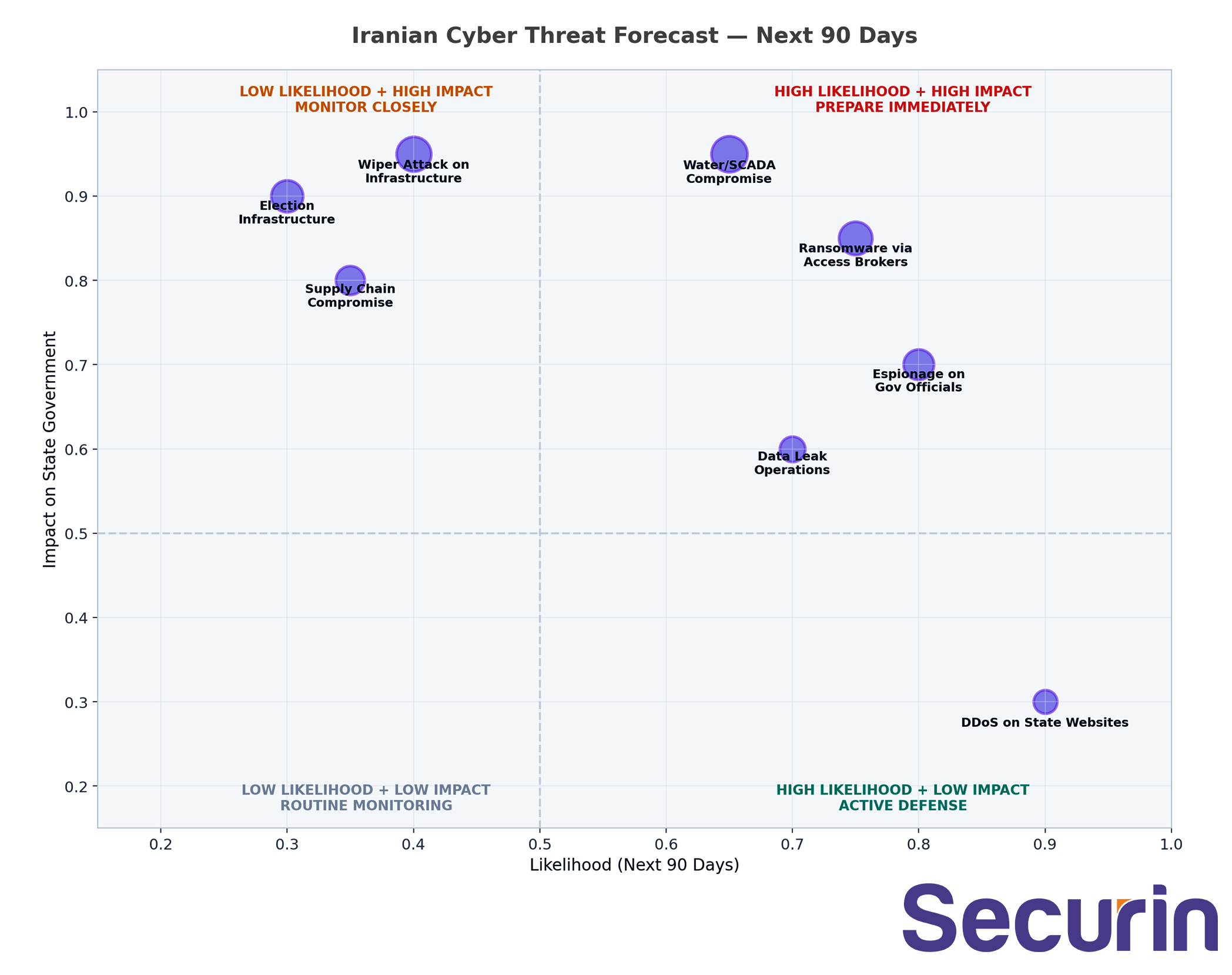
This backdrop is why disruption inside 0-30 days is assessed VERY HIGH likelihood, while ransomware and destructive outcomes cluster in the 30-90 day window as pre-positioned acccess is activated.
Section 2: Threats likely in the near future – next 90 days
Based on the active campaigns, historical Iranian playbooks, and the post-strike environment, the following threats represent the most probable near-term risks, ranked by combined likelihood and impact. These aren’t theoretical scenarios, they’re the logical next moves available to actors who already have access, infrastructure or mobilized proxy networks.
Threat 1: Retaliatory DDoS & Defacement Wave (0–30 Days) — VERY HIGH LIKELIHOOD
With centralized command structures disrupted, Iranian-aligned hacktivist proxies are likely to execute fast, visible retaliation using tools they can deploy immediately: distributed denial-of-service (DDoS) attacks, website defacements and data leaks targeting U.S. government properties. Coordination via Telegram allows large numbers of loosely affiliated groups to mobilize within hours.
During the June 2025 conflict, more than 120 groups mobilized within hours, almost simultaneously.
These operations are often dismissed as nuisance activity, but in the public sector they have outsized effects. Citizen-facing outages, manipulated public messaging, and emergency service disruptions can erode trust, create operational confusion, and overwhelm incident-response teams.
Bottom line: Expect volume, noise, and rapid target switching rather than sustained, technically sophisticated attacks.
Threat 2: Ransomware via Pre-Positioned Access (30–90 Days) — HIGH LIKELIHOOD, CRITICAL IMPACT
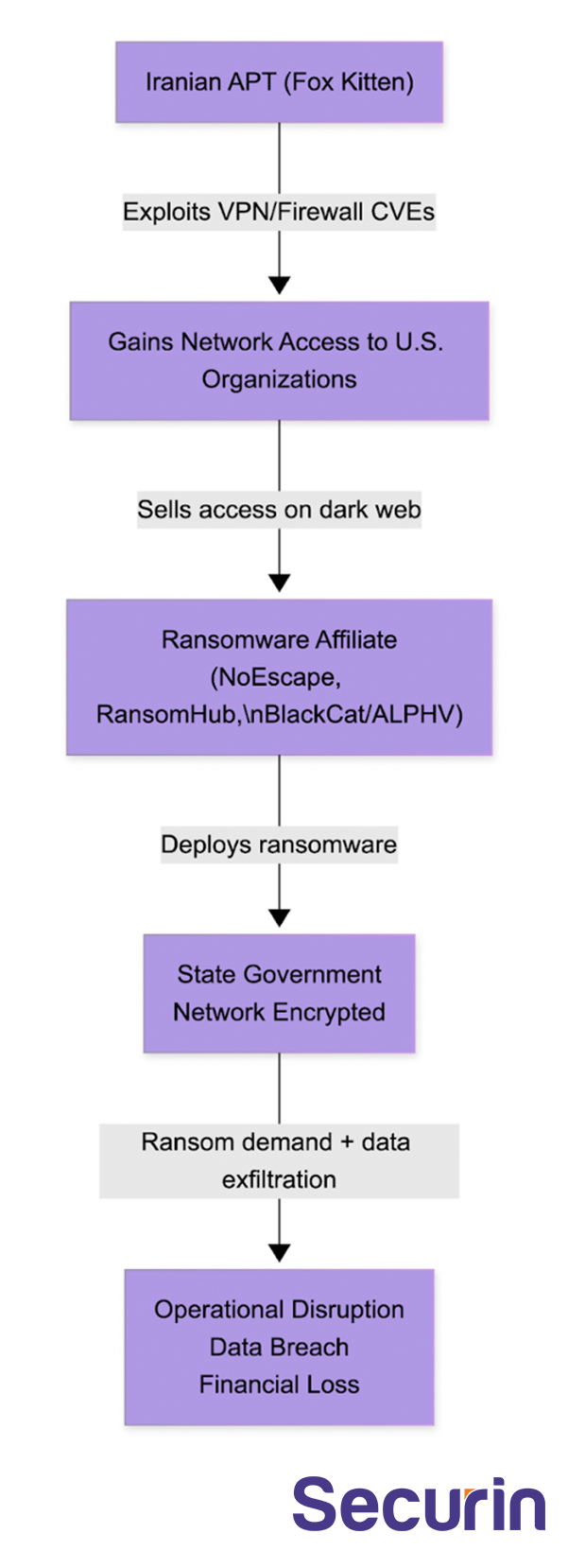
The most dangerous threat is not what actors can launch today, but what they prepared months ago. Iranian groups including MuddyWater and OilRig have repeatedly exploited VPN and Exchange vulnerabilities to establish persistent access inside U.S. networks. That access can be monetized or operationalized on demand.
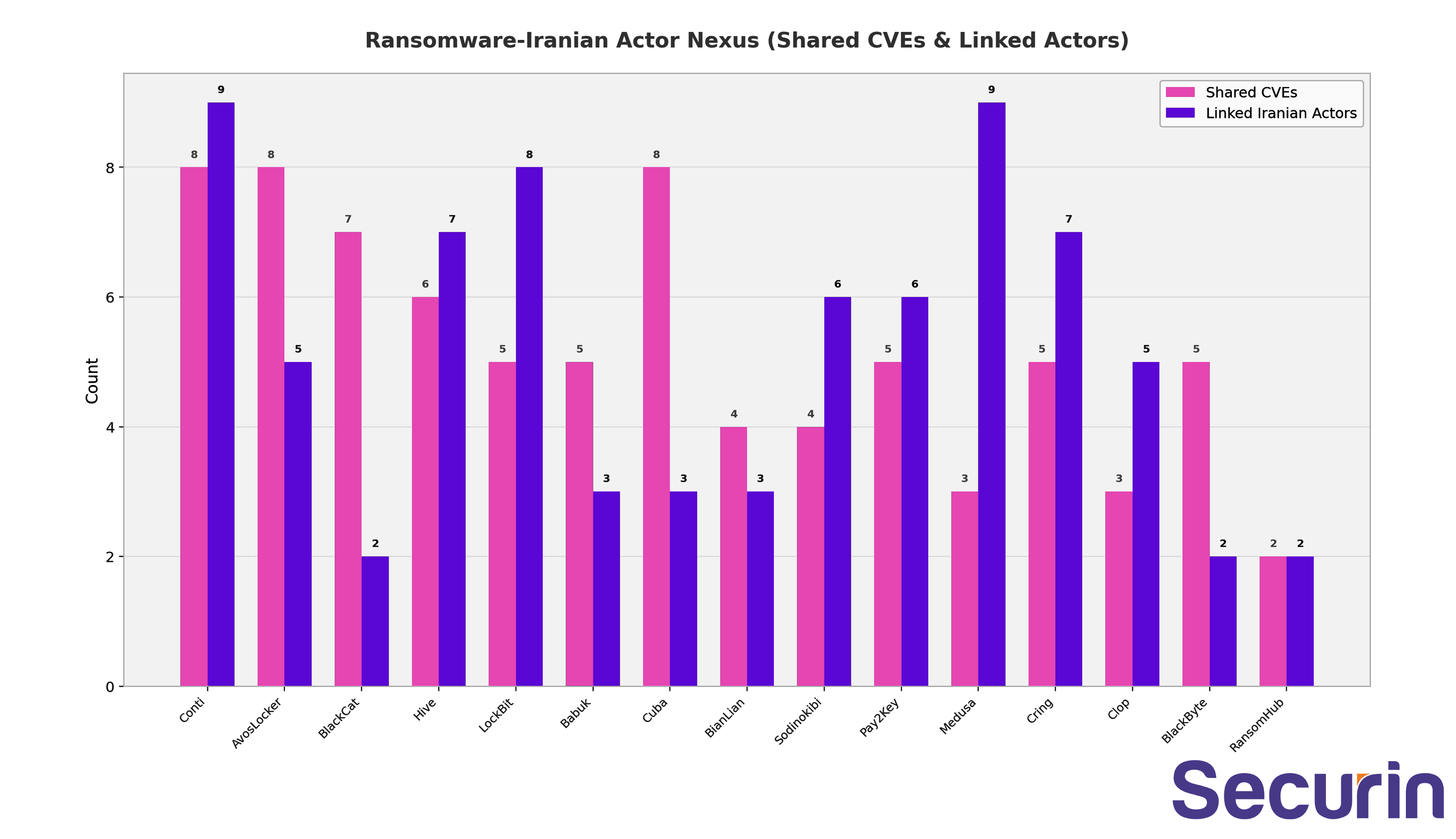
Fox Kitten functions as a bridge between state-aligned intrusion activity and criminal ransomware ecosystems, selling network access to groups such as NoEscape, RansomHub, and BlackCat/ALPHV (CISA AA24-241A). This Iran-to-ransomware pipeline is the most operationally relevant threat:
This creates a hybrid threat: politically motivated access enabling financially motivated destruction. The result is difficult to attribute and potentially devastating to operations. Unlike DDoS activity, ransomware attacks can halt government services, corrupt records, and trigger costly recovery efforts.
Bottom line: In the current environment, organizations should assume that dormant footholds exist and may be activated once attackers assess conditions as favorable.
Threat 3: Targeted Espionage Against State Officials (Ongoing) — HIGH LIKELIHOOD
Iranian intelligence operations continue regardless of crisis timelines. The SpearSpecter campaign demonstrates a patient, human-focused approach: impersonating trusted contacts on WhatsApp, cultivating relationships over time, and delivering the TAMECAT backdoor outside traditional email channels. It is actively targeting government officials.
State-level officials with defense, policy, or critical infrastructure responsibilities are plausible targets for the next wave. Compromise of a single individual can provide access to communications, credentials, and decision-making insights across multiple agencies.
MuddyWater's four new credential stealers (VAXOne, CE-Notes, Blub, LP-Notes) provide the tooling for mass credential harvesting, increasing the probability that at least some accounts will yield privileged access.
Bottom line: Expect persistent targeting of both professional and personal devices.
Iran has a documented history of deploying wipers (HomeLand Justice, Void Manticore) and ICS-specific malware (CyberAv3ngers' IOCONTROL) in retaliation. Known wiper families and ICS-focused tools indicate capability to disrupt physical services, not just digital assets.
Water, wastewater, and energy systems are particularly exposed due to legacy infrastructure, remote management interfaces, and uneven security controls. The CyberAv3ngers activity against U.S. municipal water systems shows that reconnaissance and access operations are already underway in this domain.
Bottom line: While less likely than ransomware in the near term, a successful destructive attack would produce disproportionate consequences - service outages, public safety risks, and cascading effects across dependent systems.
Longer-horizon operations may target the ecosystem around government rather than government networks directly. APT33’s Tickler campaign demonstrated the use of fraudulent Azure subscriptions to build infrastructure and impersonate legitimate services. Vendors with Israeli defense relationships are at elevated risk per the NSA/CISA joint advisory. Compromise at this layer can provide indirect access to multiple downstream entities while complicating detection and response.
Cloud-based attacks also allow actors to operate outside traditional perimeter defenses, making them particularly difficult to monitor without mature identity and logging controls.
Section 3: Best approaches to dealing with these threats
Immediate Patch Priority List
These are the CVEs most actively exploited by Iranian actors in the campaigns above. Most affect internet-facing systems that serve as initial entry points into government networks. Remediation of these exposures provides the fastest reduction in attack surface. Patch these first.
CVE(s)
Product
CVSS
Risk Index
Exploiting Groups
CVE-2021-34473, -34523, -31207
Microsoft Exchange (ProxyShell)
9.8
10.0
OilRig, DEV-0270
CVE-2021-26855, -26858, -26857, -27065
Microsoft Exchange (ProxyLogon)
9.8
10.0
OilRig, DEV-0270
CVE-2024-3400
Palo Alto PAN-OS
10.0
9.91
Fox Kitten
CVE-2023-3519
Citrix NetScaler
9.8
10.0
Fox Kitten
CVE-2024-21887
Ivanti Connect Secure
9.1
9.32
Fox Kitten
CVE-2024-24919
Check Point Gateway
8.6
9.31
Fox Kitten
CVE-2018-13379
Fortinet FortiOS
9.8
9.46
6 groups
CVE-2021-44228
Apache Log4j
10.0
9.40
MuddyWater, OilRig, DEV-0270, Cotton Sandstorm
CVE-2020-1472
Microsoft Netlogon (Zerologon)
10.0
9.43
MuddyWater
CVE-2019-11510
Pulse Secure VPN
10.0
9.43
4 groups
CVE-2023-27350
PaperCut NG/MF
9.8
9.73
MuddyWater, OilRig
Patch management in this context isn’t routine maintenance, it’s defensive triage. Systems running these vulnerabilities should be assumed to be actively targeted or already compromised.
Detection Priorities - What to Hunt For
Defenders should focus on behavioral indicators associated with the three active campaigns rather than waiting for confirmed malware signatures. Iranian operations frequently leverage legitimate tools and living-off-the-land techniques designed to blend into normal administrative activity. Based on the three active campaigns, these are the specific indicators your SOC should be hunting:
Campaign
Hunt For
Tools/Artifacts
SpearSpecter
Unusual WhatsApp/Telegram/Discord traffic from executive devices; PowerShell execution chains on VIP endpoints
This means patching against Iranian threats simultaneously reduces your ransomware attack surface. Access gained for espionage or positioning can later be monetized or weaponized by criminal partners.
Patching against Iranian exploitation delivers dual benefits: it reduces exposure to state-aligned operations and simultaneously closes pathways used by dozens of ransomware families. In practical terms, there’s no clean boundary between geopolitical cyber risk and financially motivated cybercrime
Risk Profile At a Glance
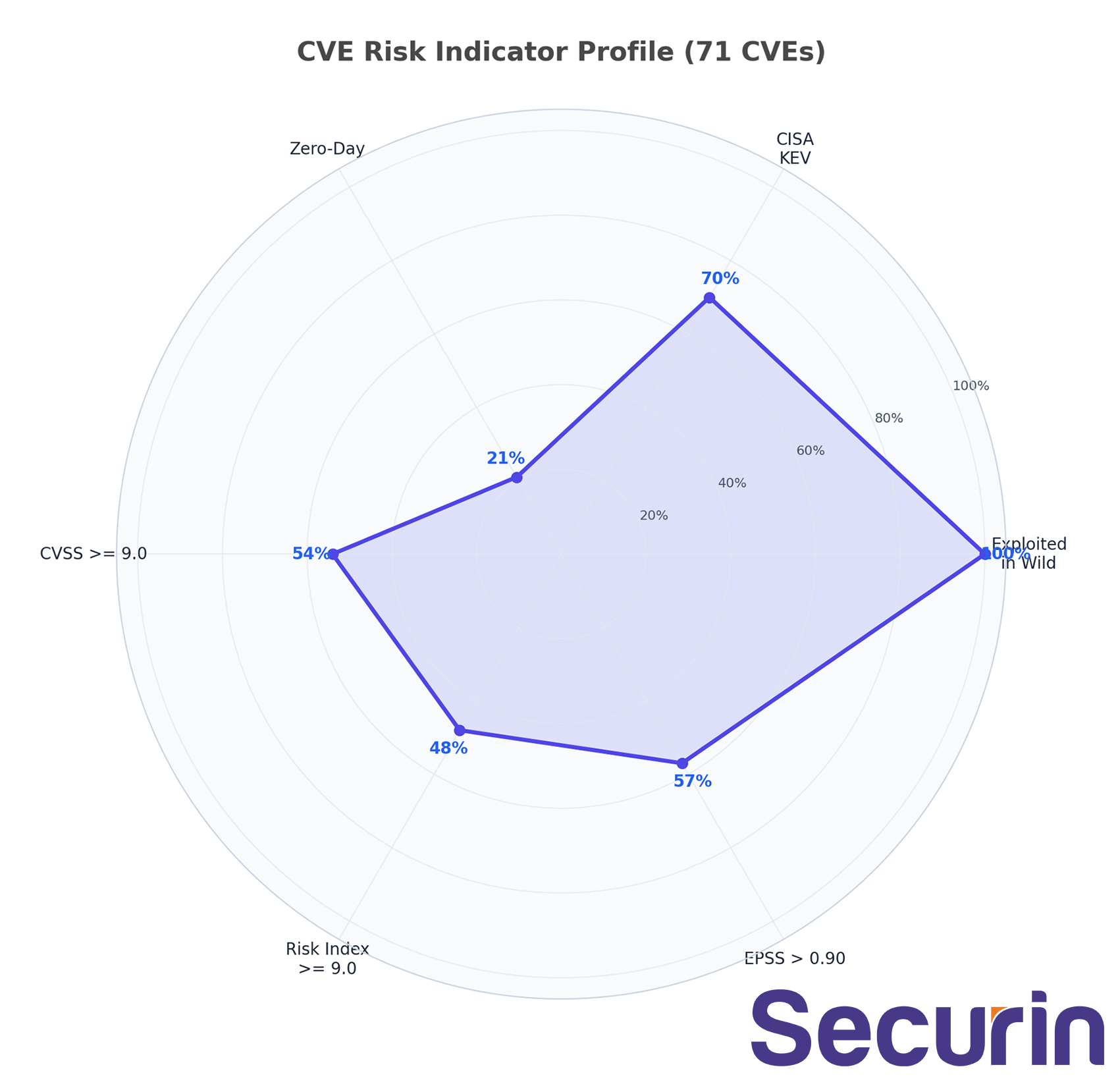
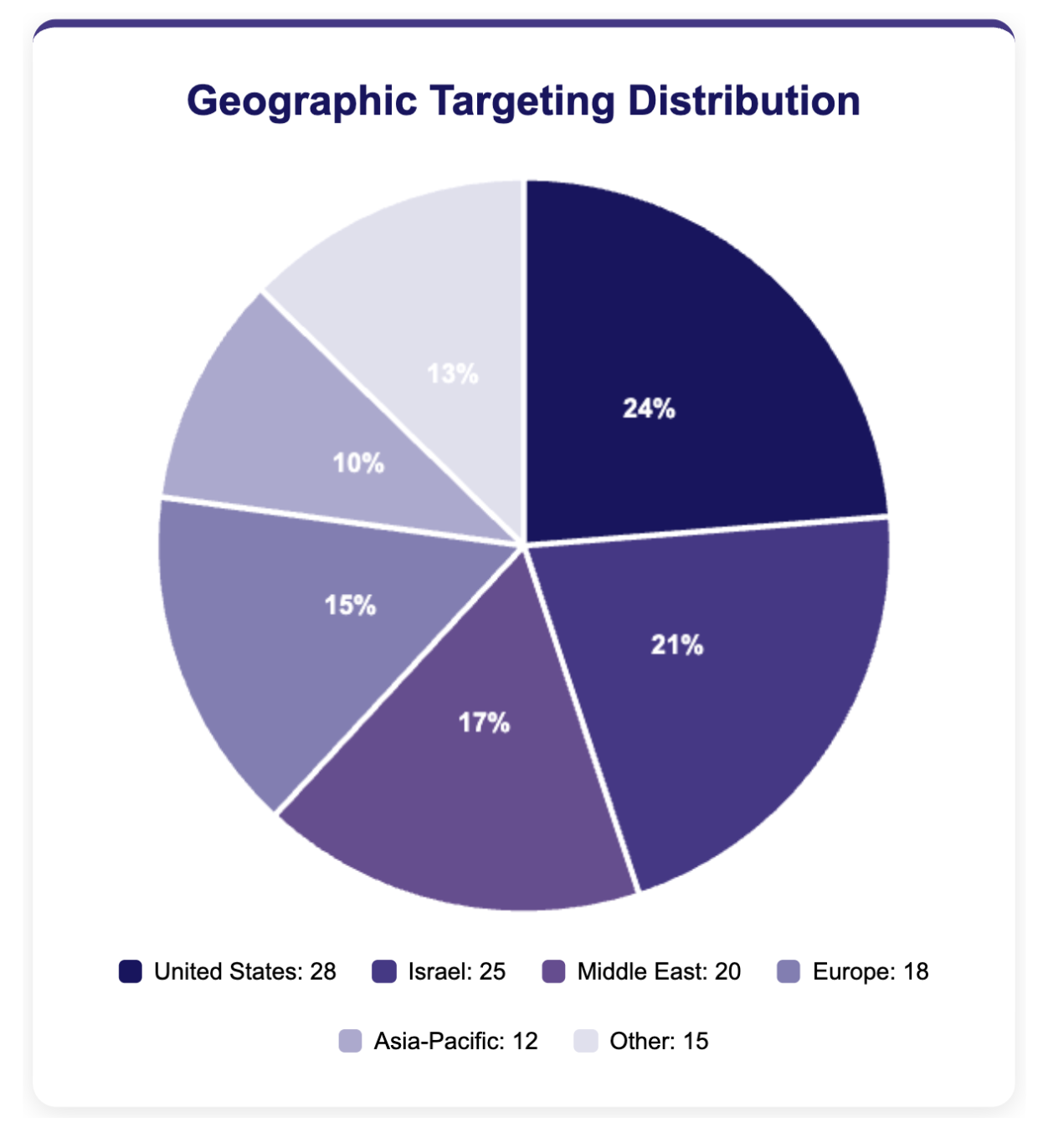
The aggregated metrics below illustrate both scale and concentration of activity. The United States remains the primary target, with a substantial number of groups actively focused on U.S. entities and a growing inventory of exploited vulnerabilities and malware families.
These figures underscore that current risk is driven not by a single actor or campaign, but by a broad ecosystem capable of sustained pressure across multiple attack vectors.
Timely reporting and information exchange are critical during periods of elevated threat. The organizations listed provide advisories, indicators of compromise, and coordination channels that can accelerate detection and response across jurisdictions.
Resource
URL
Purpose
CISA Iran Advisories
cisa.gov/iran
Latest advisories and IOCs
MS-ISAC
cisecurity.org/ms-isac
State/local government threat sharing
FBI IC3
ic3.gov
Report incidents
CISA Shields Up
cisa.gov/shields-up
Heightened threat guidance
NSA Cybersecurity Advisories
nsa.gov/cybersecurity-advisories
Technical mitigations
Key Takeaway
Iran views cyber operations as its primary tool for asymmetric retaliation. The last 120 days have produced three active campaigns with nine new malware families, a 133% surge in attacks on U.S. targets, and the most significant geopolitical trigger (Feb 28 strikes) for retaliatory operations in a decade. The combination of state-sponsored espionage (SpearSpecter), credential theft at scale (MuddyViper), and a proven ransomware access-brokering pipeline (Fox Kitten → NoEscape/RansomHub/BlackCat) creates a multi-vector threat that demands immediate action.
This creates a layered threat environment: immediate disruptive activity, medium-term ransomware risk, and ongoing intelligence collection — all supported by an expanding ecosystem of proxy actors and criminal partnerships.
Organizations that wait for visible incidents before acting will likely discover that access was established long before the first alert.
The time to act is now — not after the first incident.
For comparison, here's last year's (June 25, 2025) analysis
This edition of the Threat Actors Intelligence Report highlights Iran's robust state-sponsored cyber program, renowned for its sophisticated and coordinated operations that encompass espionage, sabotage, and financial attacks globally. With 48 identified Iranian threat groups, primarily targeting government entities, critical infrastructure, and various industry sectors worldwide, their methods include exploiting vulnerabilities in VPNs, web applications, and email systems.
These threat actors are advancing rapidly, integrating artificial intelligence, zero-day exploits, and hybrid state-criminal operations to enhance their cyber capabilities. The report underscores the need for immediate action, emphasizing patching known vulnerabilities, adopting a Zero Trust Architecture, enhancing intelligence-sharing frameworks, and fortifying critical infrastructure to withstand evolving cyber threats.
Key Findings:
• 48 distinct Iranian threat groups identified, representing one of the largest nation-state cyber ecosystems globally
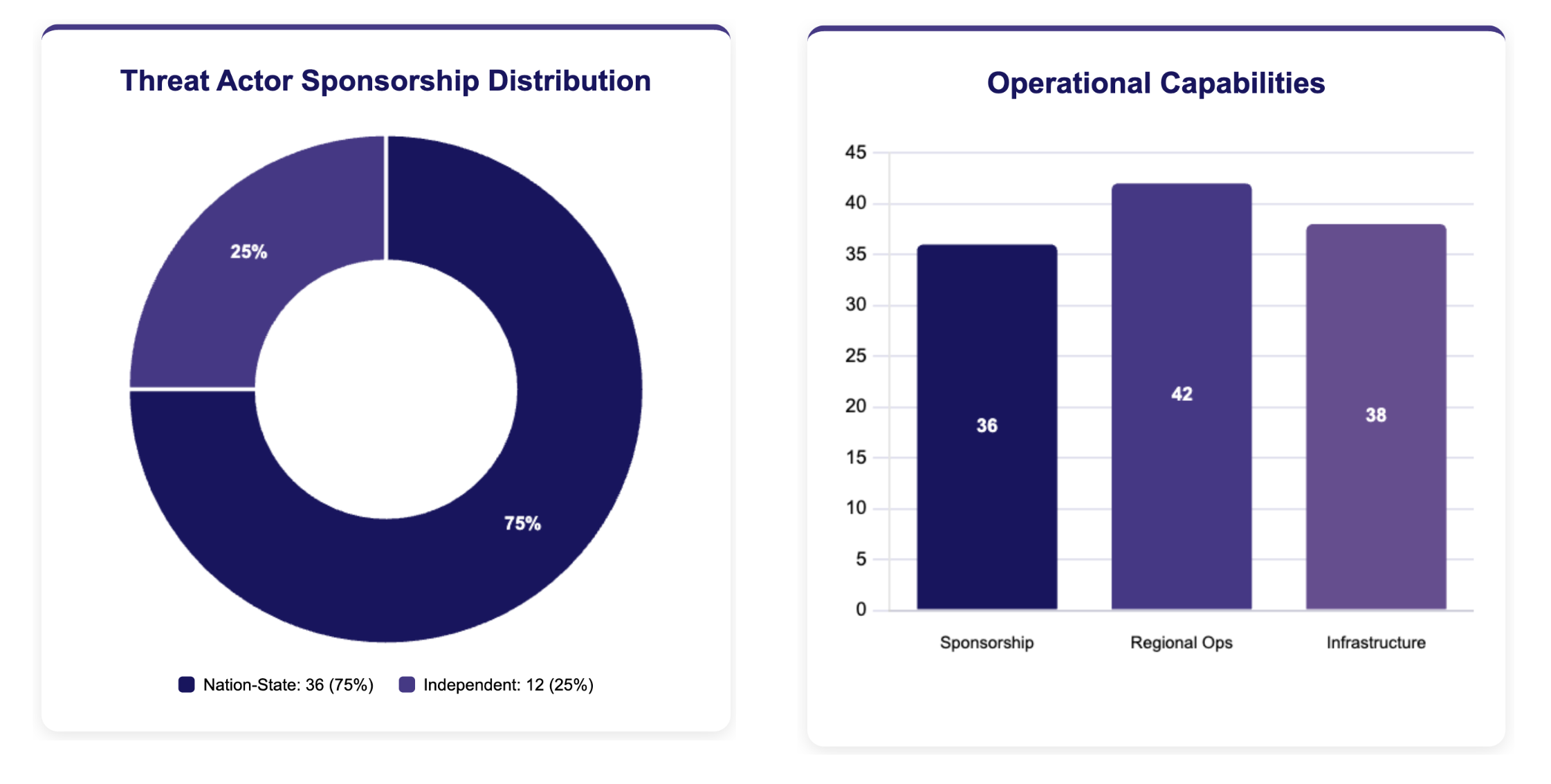
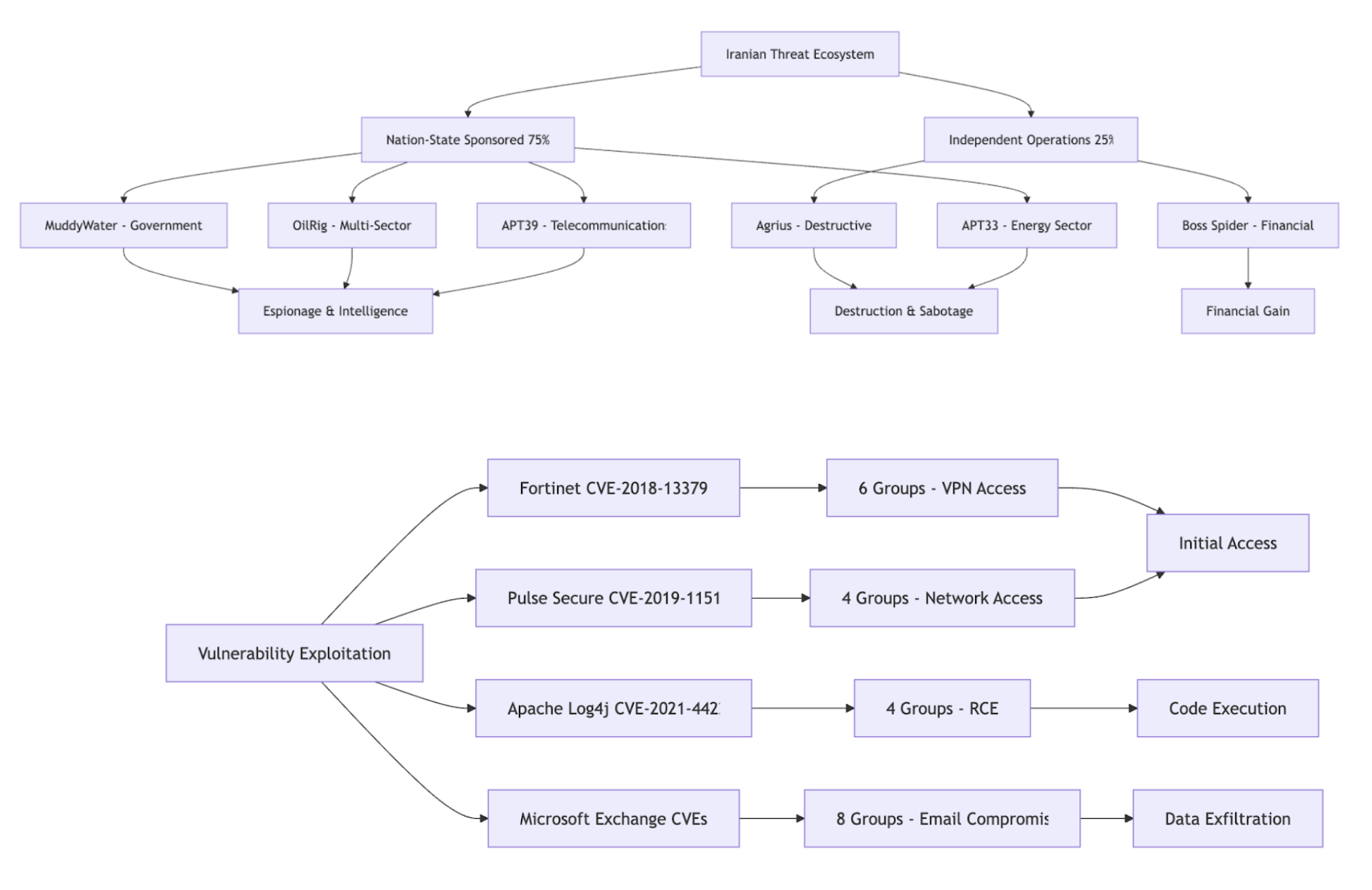
• 75% are nation-state sponsored (36 of 48 groups), indicating high-level government coordination and strategic planning
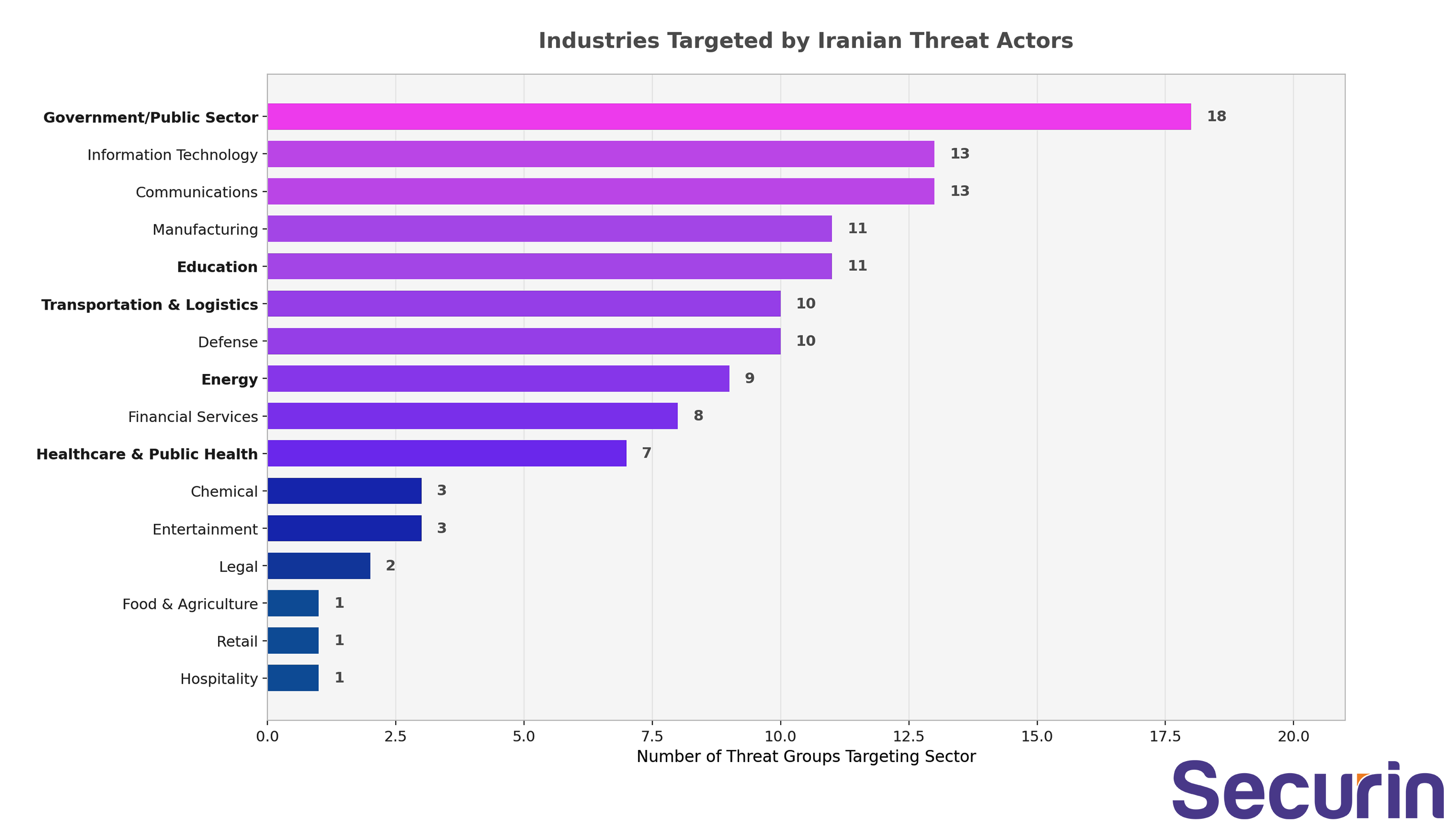
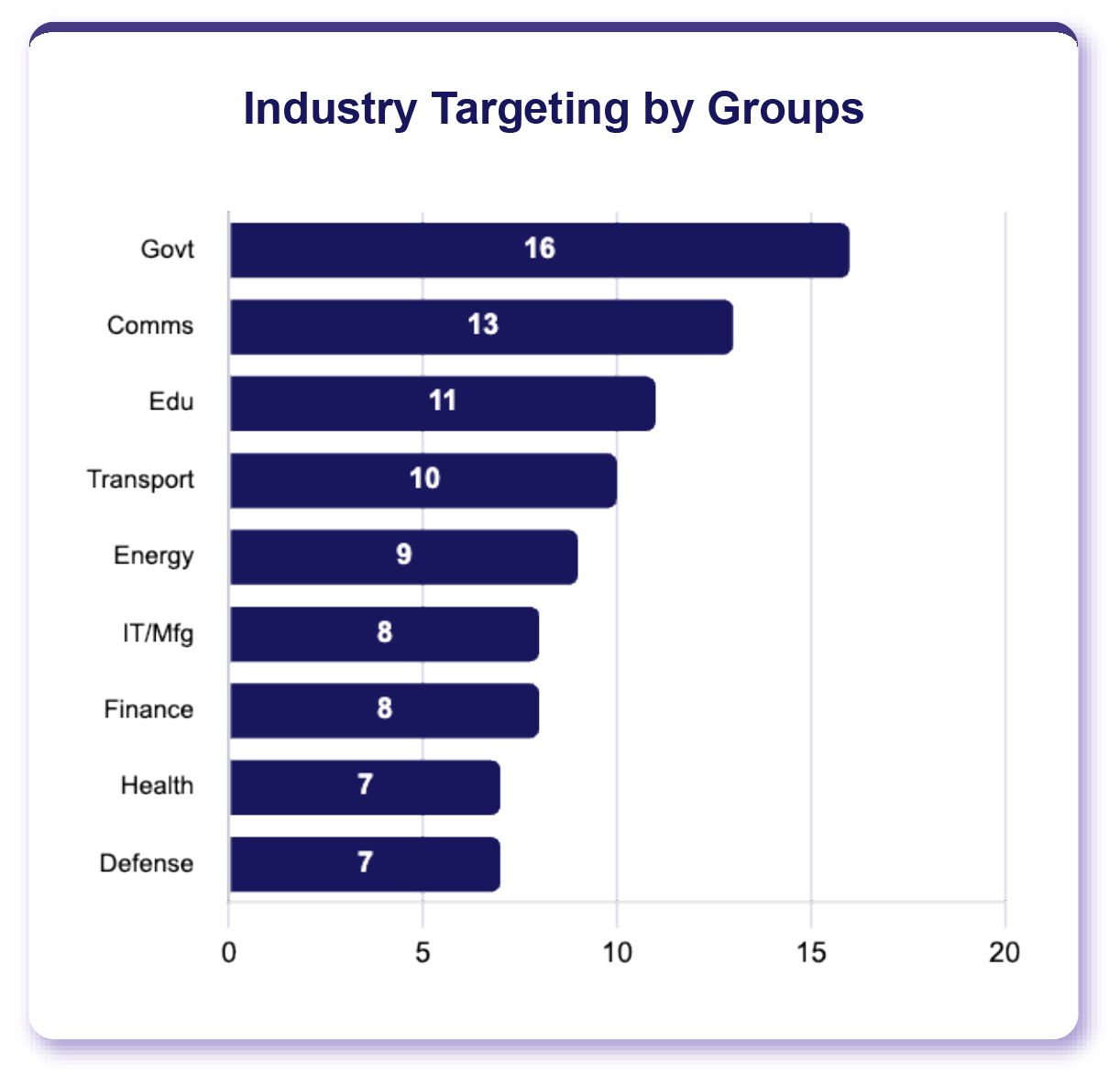
• Government and critical infrastructure targeting dominance with 16 groups targeting government facilities, followed by communications (13 groups) and education (11 groups)
• Strategic focus on perimeter security vulnerabilities, particularly targeting VPN concentrators, web applications, and email systems that provide persistent access to target networks with a total 101 CVEs exploited.
• Advanced persistent threat capabilities demonstrated through 508 distinct technique implementations and 395 tool relationships
• Global reach with strategic focus spanning 60+ countries with concentrated targeting of the Middle East, Europe, and North America.
Strategic Implications:
• Iran maintains the most diversified and operationally active state-sponsored cyber capability outside of major powers
• Escalating sophistication in vulnerability exploitation with focus on zero-day and high-impact CVEs
• Systematic targeting of critical infrastructure suggests preparation for potential cyber warfare scenarios
The cumulative operational impact of Iranian threat actors extends beyond traditional cybersecurity concerns into strategic national security implications for target nations. The systematic targeting of critical infrastructure sectors—particularly energy, communications, and government facilities—creates cascading vulnerabilities that could be activated during periods of heightened geopolitical tension or conflict scenarios.
Educational sector targeting represents a long-term strategic investment in intellectual property theft and research intelligence, with particular focus on institutions conducting defense-related research or advanced technology development. This patient approach to academic espionage suggests multi-year intelligence collection strategies designed to provide Iran with technological advantages in key strategic sectors.
The financial services targeting, while representing only eight group relationships, demonstrates capability development for potential economic warfare scenarios where financial system disruption could be employed as a strategic lever during international disputes. The integration of purely criminal financial motivations within some groups creates operational flexibility where state objectives can be pursued under cover of criminal activity.
Origin
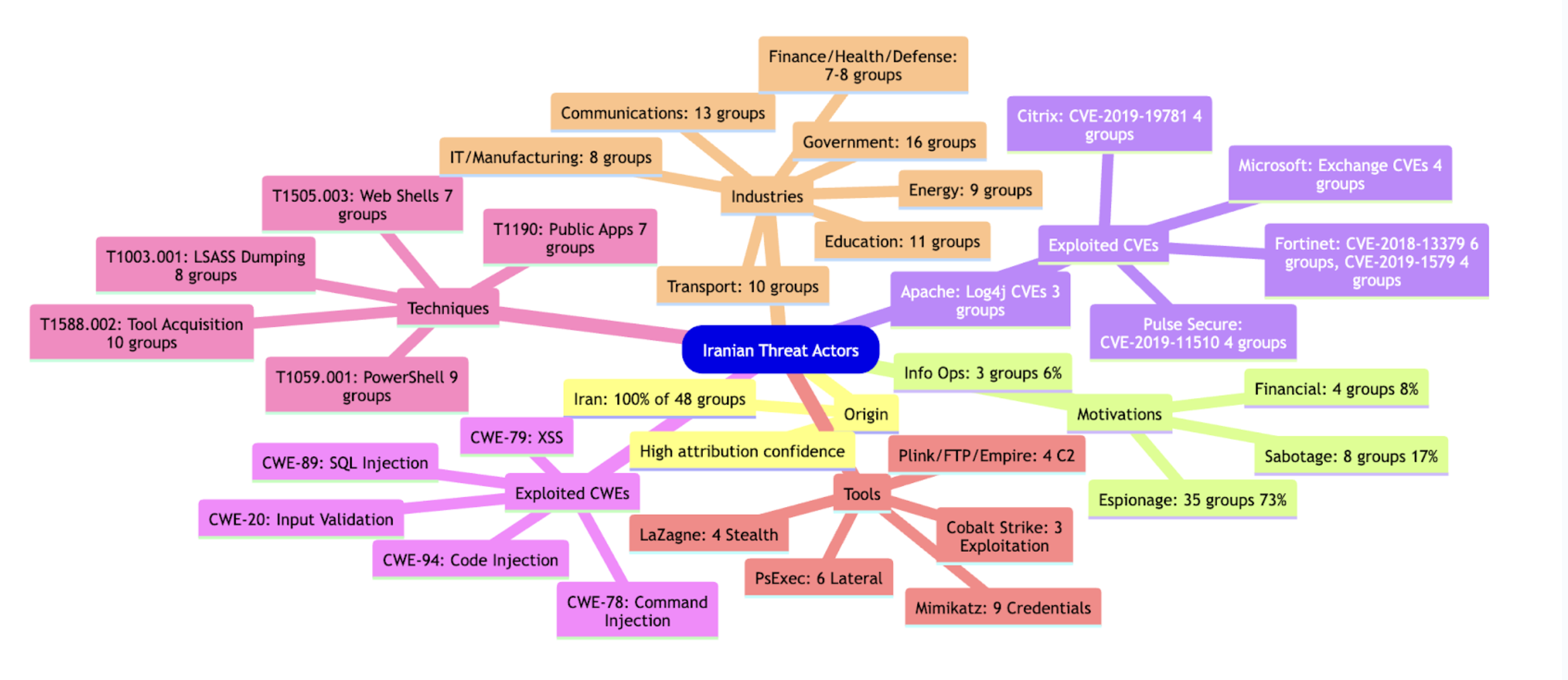
• Primary Origin: Iran (100% of analyzed groups)
• Operational Diversity: 48 distinct groups with varied operational focuses
• Attribution Confidence: High confidence based on TTPs, infrastructure, and targeting patterns
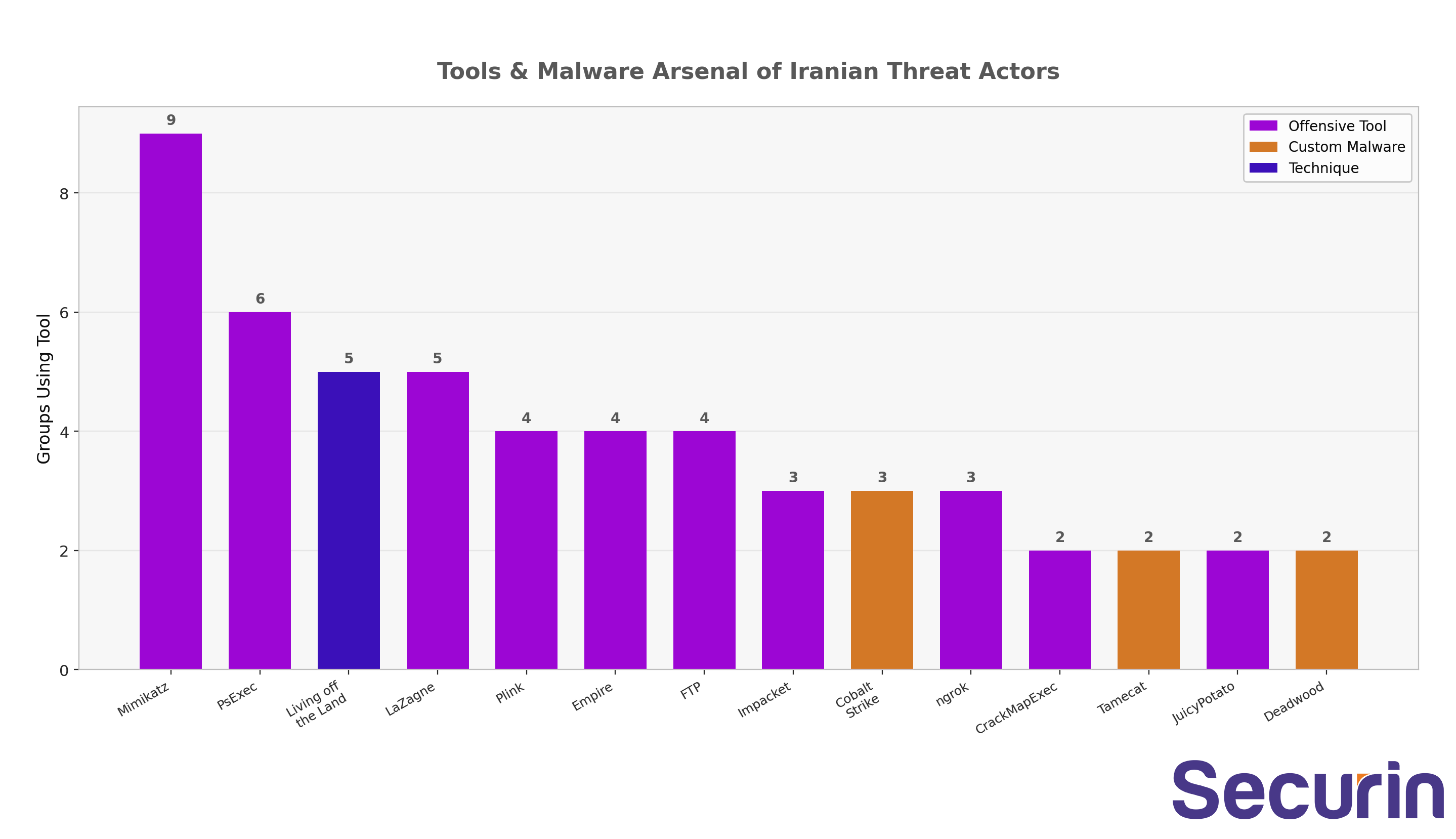
• Plink, FTP, Empire: 4 groups each (tunneling and C2)
• Living off the Land, LaZagne: 4 groups each (stealth operations)
• Impacket, Cobalt Strike, ngrok: 3 groups each (advanced exploitation
Industries Targeted
• Government Facilities & Public Sector: 16 groups
• Communications: 13 groups
• Education: 11 groups
• Transportation & Logistics: 10 groups
• Energy: 9 groups
• Information Technology & Manufacturing: 8 groups each
• Financial Services, Healthcare, Defense: 7-8 groups each
Threat Actor Distribution and Capabilities
Category
Count
Percentage
Strategic Significance
Nation-State Sponsored
36
75%
Direct government coordination
Independent/Criminal
12
25%
Deniable operations capability
Multi-Regional Operations
42
88%
Global reach and influence
Critical Infrastructure Focus
38
79%
Strategic targeting for maximum impact
The data reveals a sophisticated ecosystem where three-quarters of Iranian groups operate under direct state sponsorship, indicating centralized strategic planning and resource allocation. The remaining quarter provides plausible deniability for sensitive operations while maintaining operational alignment with state objectives.
Vulnerability Exploitation Patterns
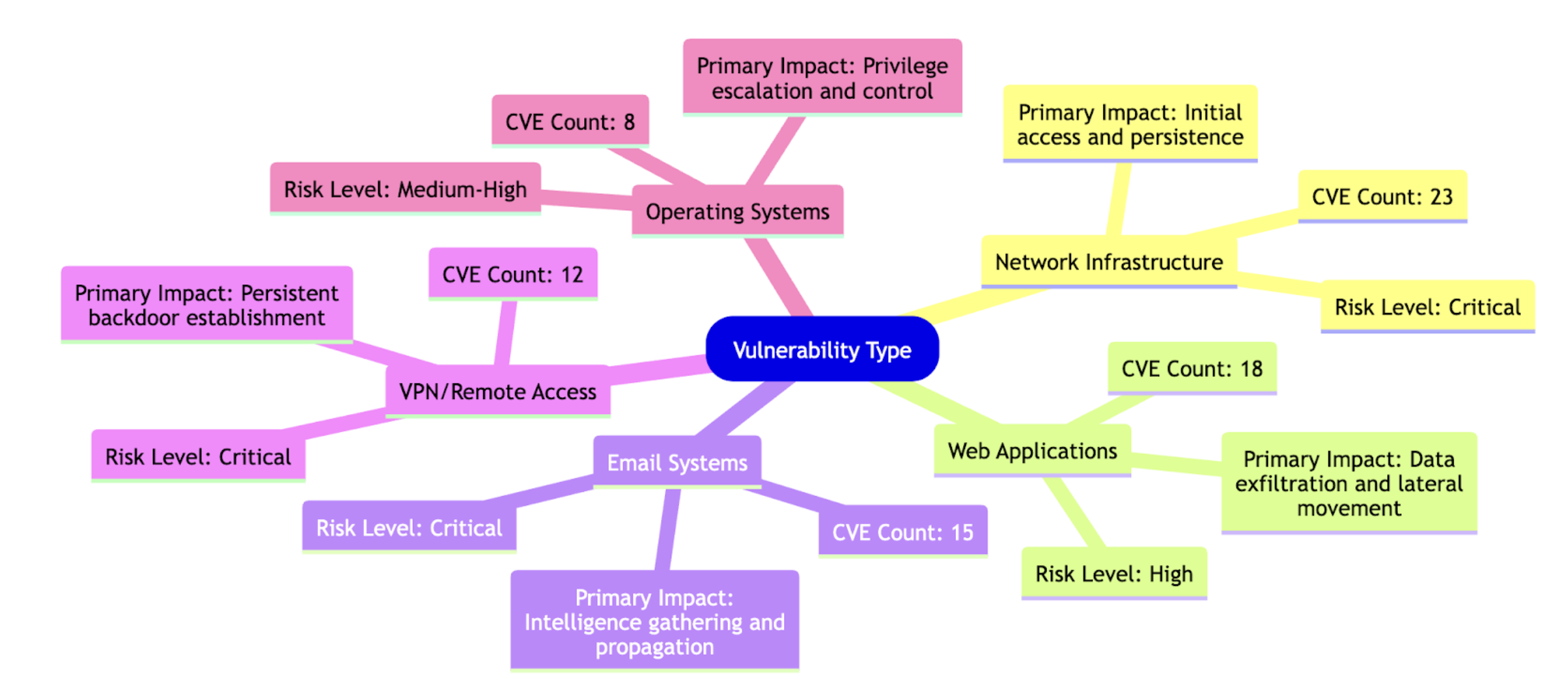
Vulnerability Type
CVE Count
Risk Level
Primary Impact
Network Infrastructure
23
Critical
Initial access and persistence
Web Applications
18
High
Data exfiltration and lateral movement
Email Systems
15
Critical
Intelligence gathering and propagation
VPN/Remote Access
12
Critical
Persistent backdoor establishment
Operating Systems
8
Medium-High
Privilege escalation and control
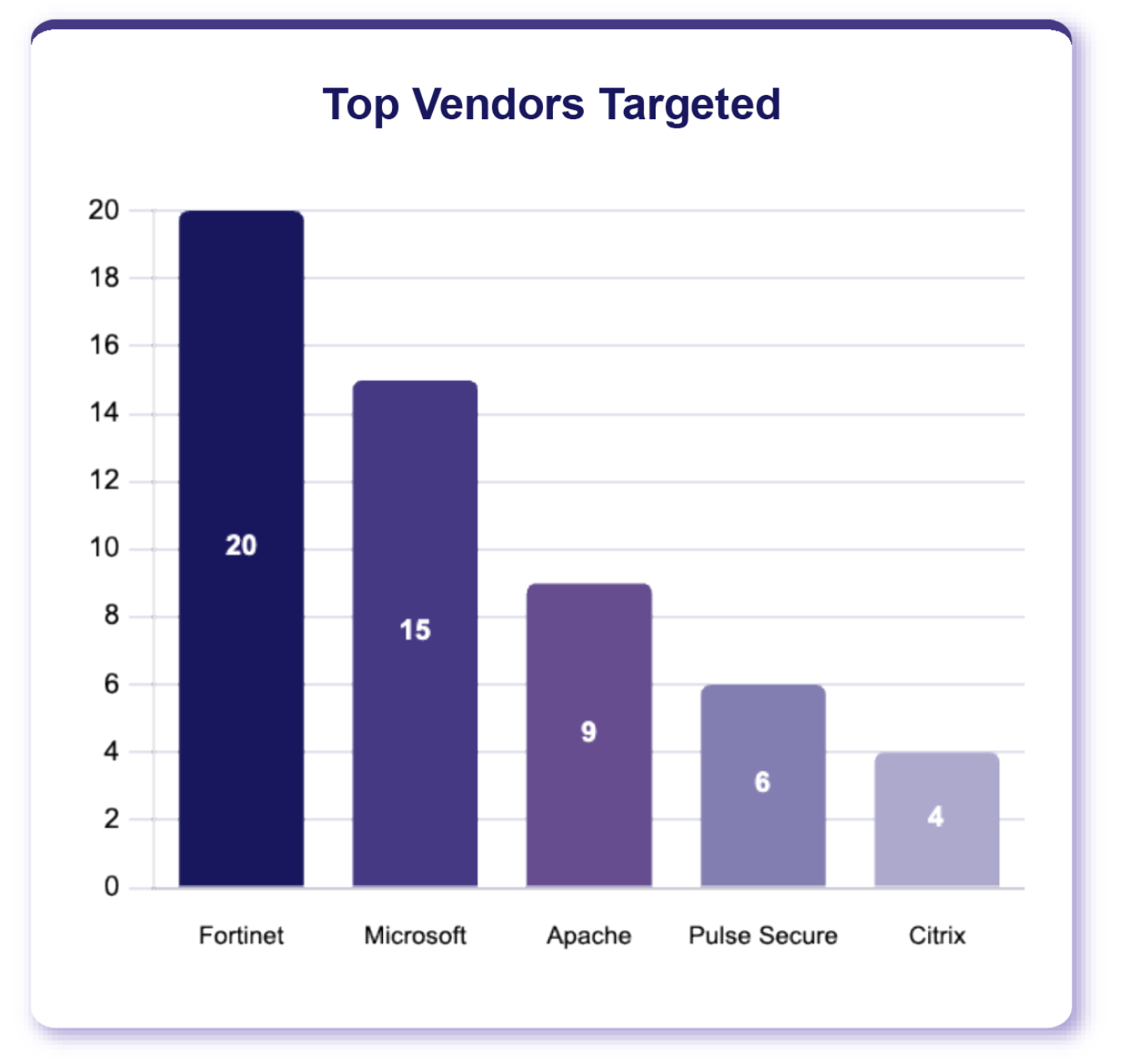
Iranian actors demonstrate strategic focus on perimeter security vulnerabilities, particularly targeting VPN concentrators, web applications, and email systems that provide persistent access to target networks. The concentration on Fortinet, Pulse Secure, and Microsoft Exchange vulnerabilities indicates systematic reconnaissance and weaponization of high-value attack vectors.
Targeting Analysis
Region
Target Countries
Groups Involved
Strategic Rationale
Middle East
15 countries
32 groups
Regional hegemony and intelligence
North America
2 countries
28 groups
Strategic adversary monitoring
Europe
12 countries
24 groups
NATO alliance intelligence
Asia-Pacific
8 countries
18 groups
Economic and technological espionage
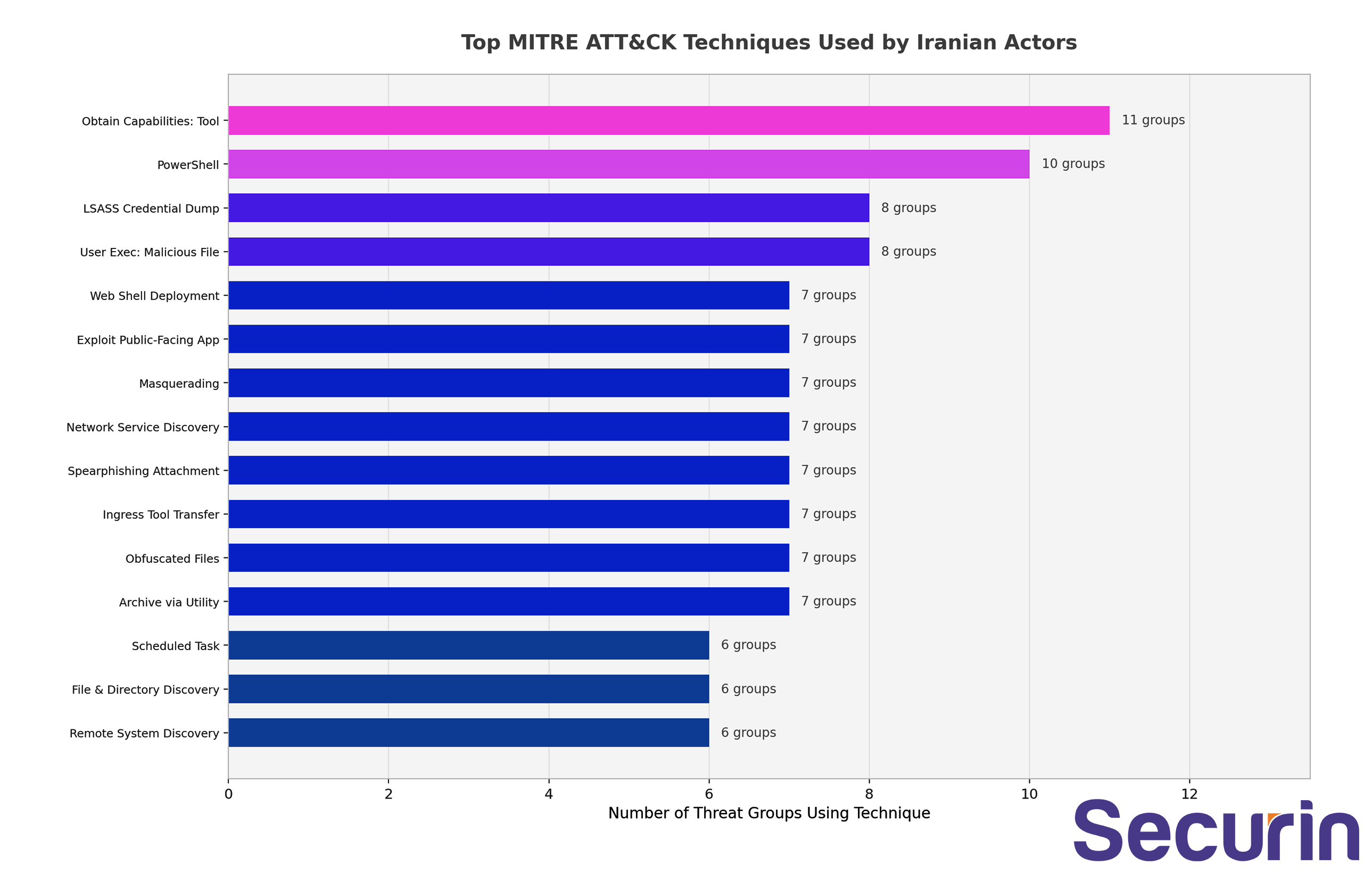
Iranian threat actors have evolved from opportunistic attacks to systematic strategic operations, demonstrating sophisticated technical capabilities. They employ layered exploitation, combining zero-day vulnerabilities with living-off-the-land techniques for operational security and persistent access. The widespread use of tools like Mimikatz and consistent PsExec deployment suggest standardized operational procedures and shared resources across Iranian groups. Their targeting strategies reveal a focus on critical infrastructure vulnerabilities like Fortinet VPN appliances and Microsoft Exchange servers, with rapid weaponization of exploits after public disclosure.
Iran's cyber operations reflect a multi-tier strategic approach: intense destructive and sabotage operations against regional adversaries, and espionage and intelligence collection against global targets. This differentiation aligns with their foreign policy and security calculations. The diversity of tools used indicates a focus on operational security and adaptive capability development, blending commercial tools with custom-developed capabilities to achieve objectives while maintaining attribution ambiguity.
Narrative Analysis
The Iranian cyber threat landscape tells the story of a nation's strategic adaptation to modern conflict realities, where cyber capabilities provide asymmetric advantages that compensate for conventional military limitations imposed by international sanctions and regional security dynamics. Beginning with basic website defacements and distributed denial-of-service attacks in the early 2010s, Iranian cyber capabilities have evolved into sophisticated multi-vector operations that integrate espionage, sabotage, and information warfare within coherent strategic frameworks.
The emergence of groups like APT33 and APT39 represents Iran's recognition that energy sector and telecommunications infrastructure constitute critical vulnerabilities in adversary nations, where successful compromise could provide both intelligence advantages and potential leverage during international crises. The systematic development of capabilities targeting these sectors reflects long-term strategic planning that views cyber operations as integral to broader national security strategy rather than merely tactical tools.
The diversification into financial crime through groups like Boss Spider demonstrates Iran's innovative approach to sanctions evasion, where cyber capabilities generate revenue streams that circumvent traditional financial system restrictions while simultaneously developing capabilities useful for strategic operations. This dual-use approach maximizes operational efficiency while providing cover for more sensitive intelligence activities.
The geographic expansion pattern visible in the targeting data reveals Iran's evolving threat perception and strategic priorities, with initial focus on immediate regional adversaries gradually expanding to include NATO allies, Asia-Pacific partners, and global technology leaders. This expansion correlates with Iran's growing confidence in its cyber capabilities and recognition of cyber domain advantages in pursuing strategic objectives against technologically advanced adversaries.
The technical evolution from basic website compromises to sophisticated supply chain attacks and zero-day exploitation demonstrates institutional learning and capability development that mirrors broader patterns seen in established cyber powers. The integration of living-off-the-land techniques with custom malware development shows sophisticated understanding of modern defense capabilities and adaptive responses to improving cybersecurity practices across target sectors.
The coordination visible across different groups in vulnerability exploitation timing and technique sharing suggests institutional structures that facilitate capability development and operational coordination while maintaining operational security through distributed execution. This distributed-but-coordinated approach allows Iran to scale operations beyond what centralized structures could achieve while maintaining strategic coherence and avoiding single points of failure.
Proactive Analysis
Following Israel's launch of 'Operation Rising Lion' targeting Iranian military and nuclear sites, Iranian cyber operations have escalated dramatically across multiple fronts. Since October 2023, Iranian actors have conducted intensive campaigns using brute force and password spraying against healthcare, government, IT, engineering, and energy sectors in Australia, Canada, and the United States, while IRGC-affiliated CyberAv3ngers compromised at least 75 critical infrastructure devices including 34 in U.S. water systems. Current intelligence confirms Iranian hackers targeting aerospace, defense, and aviation industries across Israel, UAE, Turkey, India, and Albania, with groups masquerading as hacktivists to create plausible deniability while maintaining nation-state sophistication in attacks against Israeli critical infrastructure and air defense systems.
The integration of artificial intelligence marks a significant tactical evolution, with Iranian groups leveraging AI for reconnaissance and social engineering after OpenAI shut down Crimson Sandstorm accounts used for evasion research and phishing content creation. MuddyWater introduced the advanced BugSleep backdoor in May 2024 with sophisticated sandbox evasion capabilities, while APT35 breached major cloud email providers accessing thousands of accounts and Iranian actors increasingly exploited compromised cloud infrastructure to target additional victims. Current scanning operations target Check Point Security Gateways and Palo Alto Networks devices for vulnerabilities CVE-2024-24919 and CVE-2024-3400, demonstrating rapid weaponization of zero-day exploits and systematic adaptation to cloud infrastructure migration patterns among target organizations.
Risk Mitigation Recommendations
Organizations should prioritize comprehensive vulnerability management programs with emphasis on the specific CVEs most frequently exploited by Iranian actors, particularly Fortinet, Microsoft Exchange, and Apache vulnerabilities. Implementation of zero-trust architectures provides systematic defense against the lateral movement techniques preferred by Iranian groups.
International cooperation frameworks should be enhanced to facilitate rapid information sharing about Iranian cyber activities, particularly regarding zero-day vulnerability exploitation and critical infrastructure targeting. Private sector engagement through threat intelligence sharing platforms enables collective defense approaches that leverage distributed detection capabilities.
Future Threat Projections
Iran's cyber capabilities are projected to advance in sophistication and scale, focusing on AI, quantum-resistant encryption, and supply chain attacks. Autonomous cyber weapons could escalate conflicts. Cyber operations will likely integrate with information warfare, forming hybrid threats that traditional defenses struggle against. Proliferation concerns exist as capabilities may be shared with proxies. Long-term, Iran's cyber focus will shift to critical infrastructure attacks, creating "sleeping" vulnerabilities for future military conflicts, necessitating proactive defensive strategies.