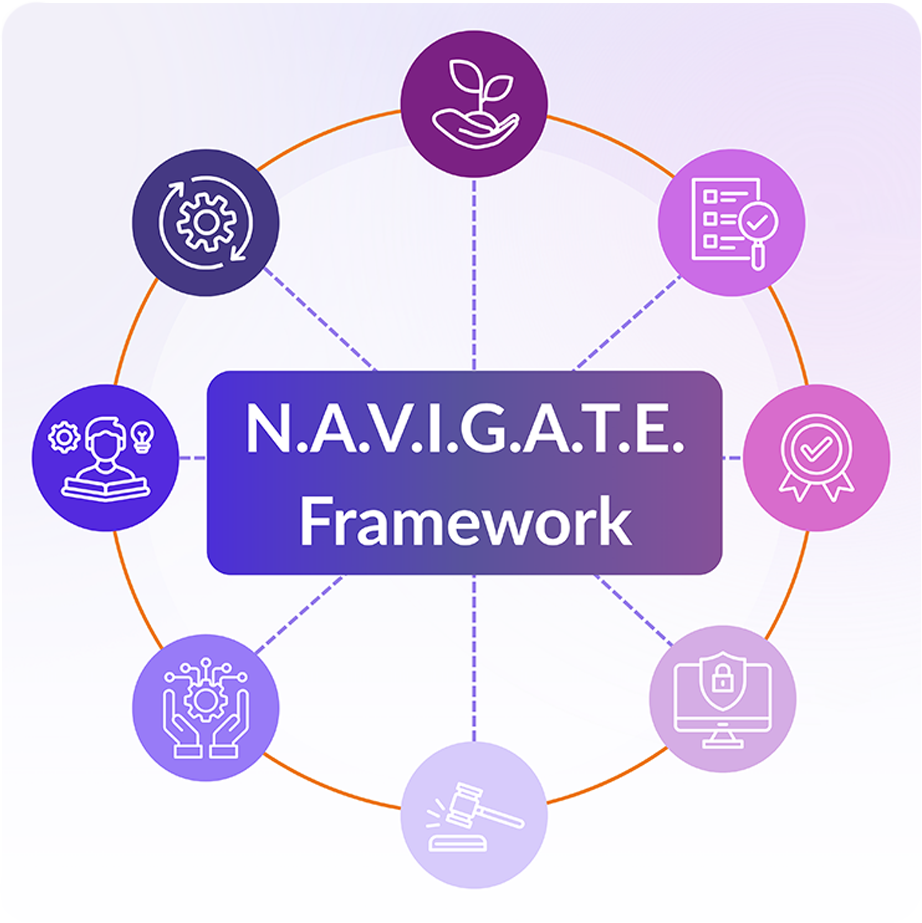
NAVIGATE AI with Confidence: A Framework for Adoption

Pamela Weaver
Securin Team


August 7, 2025
Securin’s unique framework is a structured, humans-first approach that helps organizations to adopt AI responsibly, securely, and effectively.
AI is no longer the future, it’s a present-day reality – and governance has never been more important. With over 1,000 AI bills in 2025 alone, the United States’ AI regulatory landscape is extremely fragmented:
• New York has 106 pieces of legislation on the table
• Texas: 72
• New Jersey: 67
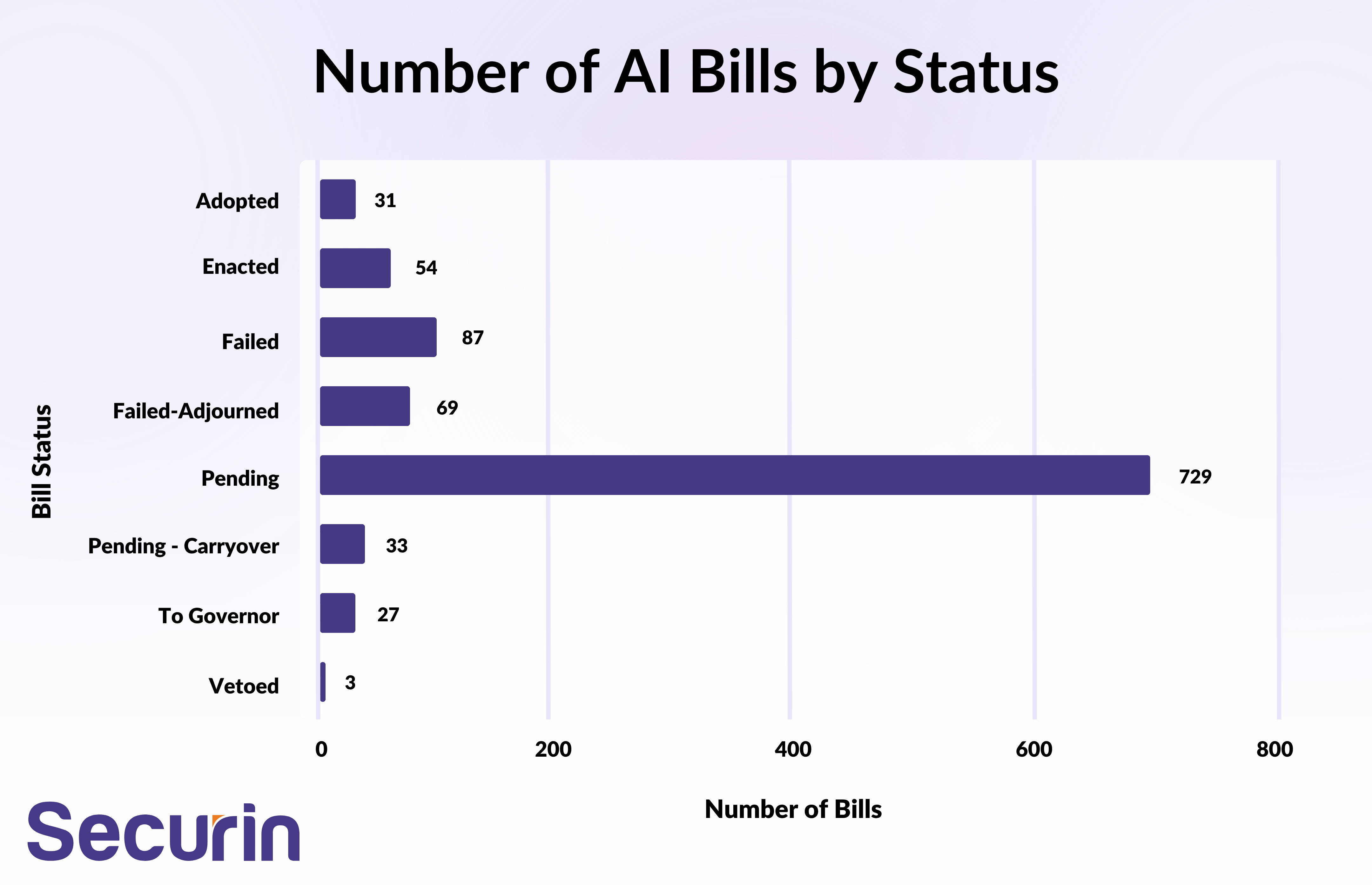
As the above graph shows, most legislation is still in the pending stage - fewer than 75 have been enacted. Meanwhile the enactment of the House Budget Bill 2025 added to the uncertainty, with a proposed 10-year moratorium on states enacting any law or regulation that limits AI models, systems or automated decision systems. Critics warned that this would create a regulatory vacuum - and the proposal was rejected, but uncertainty remains.
With no clear mandate for AI-specific cybersecurity measures, it’s time for a unified framework. That’s why Securin created NAVIGATE: it gives organizations the structure they need to progress their AI initiatives, even in an uncertain regulatory landscape.
Introducing Securin’s NAVIGATE framework for AI
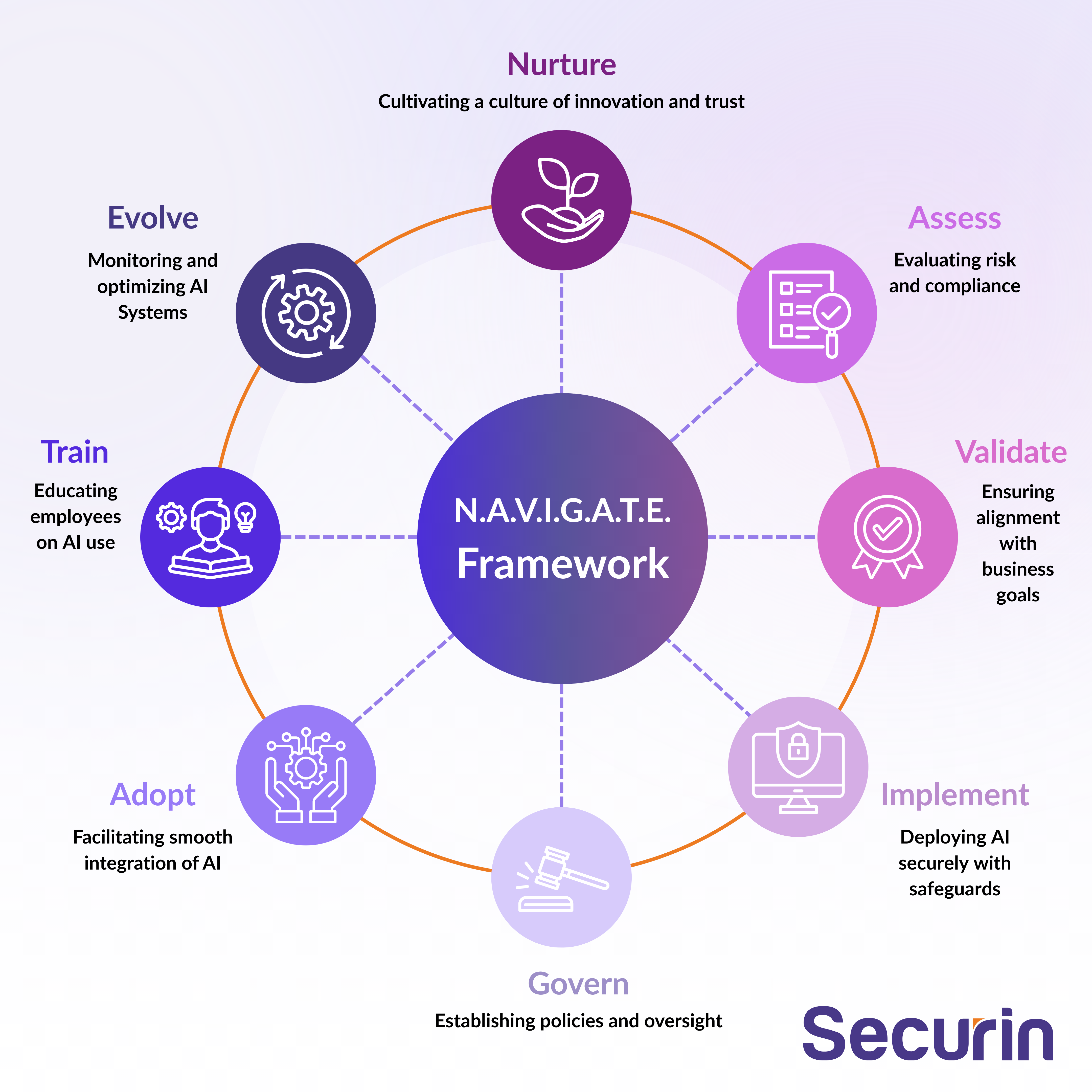
At Securin, we believe a risk-based, security-first approach must guide AI regulation and adoption. AI cannot be regulated effectively without strong governance, risk assessment and continuous oversight. The eight unified pillars of our NAGIVATE framework gives organizations a structure within which they can adopt AI responsibility, security and effectively, without needing to reinvent the wheel:
- Nurture – Cultivate a culture that supports safe, compliant AI use
- Assess – Identify gaps in AI risk, security, and compliance posture
- Validate – Ensure AI initiatives align with business goals and evolving laws
- Implement – Deploy with built-in cybersecurity and ethical safeguards
- Govern – Establish oversight, policy frameworks, and auditability
- Adopt – Integrate AI into existing systems and processes securely
- Train – Upskill teams on responsible AI use and legislative awareness
- Evolve – Continuously adapt systems to meet regulatory and threat changes
What does that look like in practice? Let’s break them down.
Nurture: Create a Culture Ready for AI
Before any technology is deployed, cultural readiness is crucial.
• Encourage Experimentation: Create safe spaces for testing new ideas and approaches.
• Reward Creative Thinking: Recognize and incentivize innovative solutions to business challenges.
• Promote Cross-Functional Collaboration: Break down silos to foster diverse perspectives and ideas.
• Allocate Resources for Innovation: Dedicate time, budget, and personnel to exploring AI opportunities.
Assess: Evaluate AI Risks and Compliance
AI introduces new technical, ethical, operational, and reputational risks. Early risk visibility enables organizations to mitigate challenges before they start. NAVIGATE gives structured methodologies to address:
• Data quality and algorithmic bias
• Regulatory readiness - such as GDPR or AI Act
• Internal policy gaps and governance maturity
Validate: Align AI with Business Goals
No AI project should exist in a vacuum. The validate pillar focuses on ensuring that AI initiatives are properly aligned with business objectives, and deliver measurable value to the organization:
• Define clear business cases and success metrics
• Conduct proof-of-concept pilots
• Involve stakeholders in testing and feedback loops
Implement: Deploy Securely, with Safeguards
AI is powerful, but must be secure. This pillar focuses on real-world deployment, emphasizing security, integration, and effective project management:
• Bake security into every stage of development
• Apply access controls and data protection measures
• Enable human oversight and bias monitoring
• Phase rollouts to minimize disruption
Govern: Establish Accountability and Oversight
AI shouldn’t manage itself. Focus on creating the structures, policies and processes needed for effective oversight and management, throughout the AI systems’ lifecycle:
• Create governance committees
• Define roles, responsibilities, and reporting structures
• Align AI oversight with wider risk and compliance efforts
• Hold regular performance monitoring and ethical reviews
Adopt: Drive Integration and User Buy-in
This pillar focuses on ensuring that AI solutions are integrated effectively into organizational processes, and are embraced by users. Some ways to ensure this:
• Redesign workflows to include AI capabilities
• Manage change through clear communication and support
• Monitor adoption metrics, including usage, user experience and efficiency
Train: Bridge the AI Skills Gap
AI isn’t only about data scientists; to be successful, it needs skilled users across the board. This pillar includes:
• Awareness training for all staff
• Technical and role-specific training for AI teams
• Security best practices and threat awareness
• Certification programs and continuous learning
• Redesign workflows to include AI capabilities
Evolve: Monitor, Adapt, Improve
The final pillar in our NAVIGATE framework is focused on ensuring that AI systems continue to perform effectively, and adapt to changing conditions over time:
• Performance tracking and feedback collection
• Scheduled reviews and version control
• Threat intelligence and scanning
• Innovation management
How NAVIGATE Extends and Complements Existing Standards
NAVIGATE isn’t here to reinvent the wheel – it builds on the best of what’s already working. Here’s how it’s grounded in leading global frameworks, providing a robust, familiar foundation for AI governance:
• NIST AI Risk Management Framework (RMF): Incorporates Govern, Map, Measure, and Manage to center risk and accountability at the core of AI deployment.
• NIST Cybersecurity Framework 2.0 (CSF): Extends the cybersecurity principles of Identify, Protect, Detect, Respond, and Recover to AI systems, bridging IT and AI risk management.
• ISO 42001: Aligns with the AI Management Systems (AIMS) standard, supporting structured implementation and continuous improvement across the AI lifecycle.
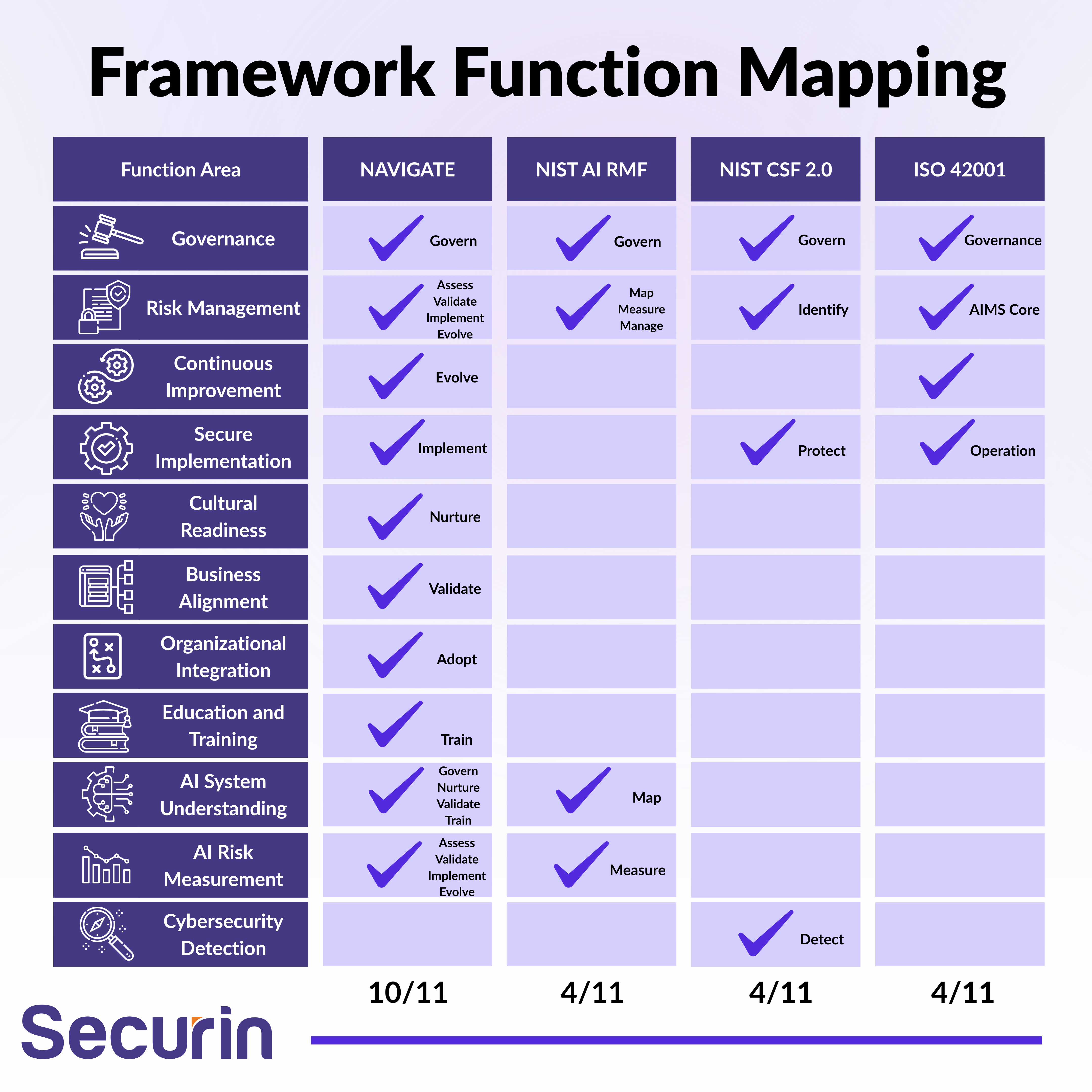
By drawing on existing, trusted frameworks, NAVIGATE offers a unified, actionable path for organizations to deploy AI with confidence. What sets NAVIGATE apart from existing frameworks is its full-spectrum focus: bridging technical, cultural, and strategic gaps that existing frameworks leave unaddressed. Three critical differentiators:
- Broader Scope: Unlike NIST AI RMF’s focus on risk, NAVIGATE spans the full AI lifecycle, from cultural readiness to continuous evolution – ensuring that AI isn’t just compliant, but impactful and sustainable.
- Organizational Focus: NAVIGATE tackles strategic alignment, staff training, and change management – key areas that are overlooked in traditional risk or security frameworks like NIST CSF and ISO 42001.
- AI-specific Adaptation: Where other frameworks generalize around cybersecurity or system governance, NAVIGATE’s approach is tailored to AI’s unique challenges, bridging operational, technical, and human dimensions.
Bottom line: Securin’s NAVIGATE framework delivers a more complete, adoption-focused blueprint for responsible, resilient AI at scale.
NAVIGATE to AI Success
The NAVIGATE framework helps organizations to manage the challenges on AI adoption more effectively and responsibly, maximizing the benefits while minimizing the risks:
• Structured Approach: A comprehensive methodology for managing the complexities of AI adoption.
• Risk Mitigation: Systematic identification and addressing of potential issues.
• Enhanced Governance: Clear structures and processes for effective oversight.
• Improved Alignment: Better connection between AI initiatives and business objectives.
• Cultural Transformation: Development of an organization that embraces innovation responsibly.
• Sustainable Implementation: Long-term approach that evolves with changing technologies and needs.
As AI technologies continue to evolve, the NAVIGATE framework will adapt to address emerging challenges and opportunities, including enhanced integration, advanced tools and community development.
Share this post on: